The Humility of Reliable Systems
I. When the Lights Go Out
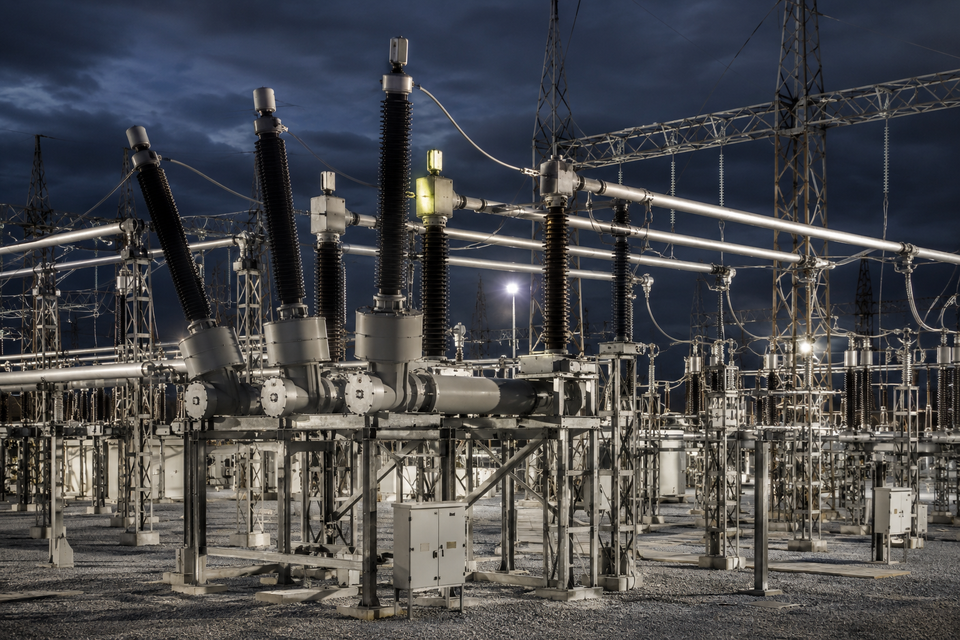
On the afternoon of 14 August 2003, much of the north-eastern United States and Canada disappeared into darkness. More than fifty million people suddenly found themselves disconnected from one of civilisation's least visible, yet most indispensable, infrastructures. Railways stopped where they stood. Water treatment plants switched to emergency procedures. Telecommunications degraded. Industrial production halted. In less than ten minutes, an electrical system assembled over more than a century fragmented into isolated islands of light surrounded by darkness.
Public attention naturally turned towards causes. Which transmission line failed? Which operator made the wrong decision? Which utility had neglected maintenance? Which software failed to recognise the developing instability?
Electrical engineers asked a question that sounded almost indifferent to the initial failure.
Why did the blackout stop where it did?
The distinction matters because it separates engineering from storytelling. Stories seek origins. Engineering seeks boundaries. The former explains why yesterday happened. The latter determines whether tomorrow survives.
Every continental power grid contains millions of components designed by different manufacturers, installed across different decades, maintained under different economic conditions and exposed to wildly different environments. Steel fatigues. Copper expands and contracts. Insulation ages. Protection relays drift out of calibration. Trees continue growing regardless of maintenance schedules. Lightning ignores procurement strategies. Operators make imperfect decisions because perfect information has never existed outside textbooks.
Given enough time, every individual component will eventually disappoint its designer. Electrical engineers therefore begin with an assumption that many organisations still regard as pessimism.
Failure is inevitable.
The discipline simply refuses to allow inevitability to become catastrophe.
That quiet distinction explains almost every design decision hidden inside a modern power grid.
II. The Enemy Engineers Actually Fear
The public imagines that power grids exist to generate electricity. They do not. Power stations generate electricity.
Power grids perform a far more difficult task. They continuously absorb millions of local disturbances without allowing those disturbances to rewrite the behaviour of an entire continent.
That challenge exists because electricity possesses an unusual property shared by remarkably few resources. It cannot wait.
- Water waits behind dams.
- Cargo waits inside ports.
- Aircraft enter holding patterns.
- Factories accumulate inventory.
- Digital systems buffer messages.
Electricity just refuses every one of those luxuries.
The instant a transmission corridor disappears, energy does not pause while operators organise a meeting or review an incident report. The laws of physics immediately redistribute power through every remaining path according to impedance, regardless of commercial contracts, organisational charts or human intentions. Every surviving conductor instantly inherits part of the burden abandoned by the failed one.
If that additional burden exceeds its thermal limit, protective equipment disconnects it. Its electrical load immediately searches elsewhere.
The process repeats.
The first failure therefore changes the operating conditions of every component that remains healthy. Failure begins manufacturing additional failure, not because the equipment behaves unpredictably but because it behaves with relentless consistency. Physics never improvises. It merely applies the same rules to increasingly deteriorating conditions.
This phenomenon terrifies grid designers. Not because individual failures surprise them. Because propagation grows faster than human intervention.
Every mature electrical grid therefore resembles less a machine producing electricity than a machine interrupting positive feedback loops. Protection relays analyse voltages, currents, phase angles and frequencies thousands of times each second, searching not for broken equipment but for unstable behaviour. Circuit breakers willingly sacrifice continuity before equipment sacrifices itself. Automatic frequency control recruits reserve generation within seconds because synchronising new production after collapse takes far longer than preventing collapse altogether. The N-1 design principle assumes, before construction even begins, that any significant component may disappear without warning while the remainder of the network continues operating safely. When every other defence proves insufficient, operators deliberately divide the grid into electrically independent islands, accepting local darkness as the price of preserving continental stability.
None of these mechanisms produce a single additional kilowatt. None increase revenue. None improve quarterly utilisation.
Yet together they represent some of the most valuable infrastructure ever constructed. They exist for one purpose only. To ensure that failure dies where it was born.
III. The Price of Distrust
This engineering philosophy immediately collides with economics.
- Reserve generators spend much of their operational life producing nothing.
- Duplicate transmission corridors frequently carry only a fraction of their theoretical capacity.
- Standby transformers consume capital while quietly waiting for neighbouring equipment to fail.
- Protection systems perform flawlessly by remaining invisible.
- Entire control centres duplicate one another despite hoping never to assume responsibility.
Viewed individually, these investments appear almost irrational. Modern accounting naturally asks uncomfortable questions. Why purchase expensive assets that ideally remain unused? Why maintain equipment whose greatest achievement consists of never attracting attention? Why deliberately construct excess capacity inside infrastructure whose demand engineers continuously strive to forecast more accurately?
The answer reveals one of the oldest disagreements between accounting and engineering.
- Accounting evaluates assets. Engineering evaluates systems.
- Accounting asks how efficiently individual investments generate visible output. Engineering asks how expensive tomorrow becomes after today's optimisation removes the wrong component.
Those questions appear similar until uncertainty enters the calculation.
A transmission corridor operating permanently at one hundred percent utilisation delights financial reporting. Every euro invested appears fully employed. Every kilometre of conductor produces measurable value. Every asset contributes directly to current demand.
Until another transmission corridor unexpectedly disappears.
The previously celebrated efficiency immediately becomes fragility because no remaining capacity exists to absorb reality's interruption.
Conversely, a reserve generator sitting idle throughout an entire financial year appears almost embarrassing. Quarter after quarter it depreciates while producing little measurable return. Yet the afternoon it prevents a cascading collapse across an industrial region, decades of disappointing utilisation suddenly purchase one of the highest returns on capital anywhere inside the network.
Engineering therefore values something that balance sheets struggle to represent. Options.
- Redundancy purchases options.
- Margins purchase time.
- Isolation purchases survivability.
- Idle capacity purchases freedom.
- None of those investments maximise today's production.
- Every one reduces tomorrow's expected loss.
Reliable systems therefore do something profoundly unfashionable. They spend extraordinary sums preparing for futures they sincerely hope never arrive.
IV. Reliability Creates Its Own Enemies
Curiously, success introduces a problem that no engineer can solve with additional technology.
It changes memory.
Every year without a major blackout quietly weakens the political and economic arguments for the infrastructure that prevented it. Reserve margins begin looking excessive. Duplicate transmission corridors appear permanently underutilised. Preventive maintenance seems increasingly expensive compared with corrective maintenance that rarely appears necessary. Entire generations of decision-makers eventually inherit systems whose greatest achievement consists of making catastrophe sufficiently rare that catastrophe no longer influences investment decisions.
Reliability therefore manufactures evidence against itself.
Unlike production, resilience leaves remarkably little visible output. Nobody notices the transmission line that never overloaded because another corridor quietly accepted part of its burden. Nobody congratulates the protection relay that interrupted instability forty milliseconds before it became a regional emergency. Nobody celebrates the reserve generator that remained idle for eleven years before preserving an industrial region during one winter afternoon.
Successful protection systems erase the memory of the events they prevent. This creates a profoundly asymmetric economic problem. The cost of resilience appears every quarter. Its value may appear once every twenty years.
Accounting naturally discounts uncertain future events. Engineering cannot afford to. The electrical grid therefore becomes an uneasy compromise between two entirely rational perspectives. One discipline attempts to maximise the productivity of capital already invested. The other attempts to minimise the cost of events that may never happen but whose consequences would overwhelm decades of accumulated savings.
Neither discipline misunderstands the problem. They simply optimise different futures.
History repeatedly demonstrates the consequences of forgetting that distinction. Nearly every significant advance in power-system protection arrived after engineers observed failure spreading further than previous generations believed possible. The evolution of interconnected networks, automatic protection, frequency control, spinning reserve and sophisticated relaying rarely emerged from technological optimism. They emerged from accumulated memory. Every generation of engineers inherited the failures of the previous one and quietly transformed them into design principles.
Infrastructure remembers. Institutions often forget.
V. The Organisational Blackout
The same economic tension quietly appears inside organisations, although it rarely carries the language of electrical engineering.
Successful businesses gradually begin asking remarkably familiar questions.
- Do we really need another platform team?
- Why maintain disaster recovery that nobody has used for years?
- Why pay engineers to automate incidents that almost never occur?
- Why duplicate expertise across multiple teams?
- Why tolerate apparent slack when utilisation could approach one hundred percent?
Each question appears financially responsible. Viewed individually, many of them are. The difficulty emerges only because organisations, like electrical grids, operate as systems rather than collections of independent assets.
The experienced engineer who understands a critical subsystem resembles far more than an employee. They resemble a transformer.
A deployment pipeline resembles more than software. It resembles a transmission corridor.
Cross-trained engineers resemble reserve generation.
Independent teams resemble electrical islands capable of continuing operation after neighbouring systems encounter difficulties.
Once viewed through that lens, many familiar organisational failures begin looking surprisingly familiar. A key specialist leaves. Knowledge concentrates elsewhere. Additional work flows towards the remaining experts. Those experts become bottlenecks. Delivery slows. Projects compete for increasingly scarce technical judgement. Management introduces additional coordination to regain control. Meetings replace autonomy. Approvals replace local decisions. The organisation attempts to compensate for lost resilience by increasing supervision.
The cascade has already begun. Nobody intended to create fragility. The system simply redistributed its load exactly as physics redistributes electrical current.
Local failure became systemic because every previous optimisation quietly removed another mechanism capable of absorbing disturbance.
The irony deserves attention. Organisations frequently celebrate integration. Engineers designing continental power grids celebrate isolation.
One attempts to maximise connectedness. The other carefully decides where connectedness must end.
VI. Confidence and Humility
This difference ultimately reflects philosophy rather than technology. Engineering possesses remarkably little interest in confidence.
Physics has never rewarded optimism. Transmission lines ignore executive commitment. Lightning remains indifferent to strategic planning. Metal fatigue does not negotiate. Human judgement deteriorates after long shifts regardless of professional competence.
Reality consistently refuses to respect confidence. Engineering therefore institutionalises something considerably more useful. Distrust. Not distrust of people. Distrust of certainty.
Every mature engineering discipline quietly assumes that competent people working with excellent equipment under well-designed procedures will nevertheless encounter circumstances none of them anticipated. Bridges therefore possess safety factors. Aircraft carry redundant flight-control systems. Nuclear plants construct multiple containment barriers. Spacecraft duplicate computers separated by entirely independent electrical architectures. The Internet deliberately routes around damaged infrastructure because damaged infrastructure eventually becomes inevitable.
Reliable systems assume that reality will eventually prove somebody wrong. Not because somebody lacks ability. Because complexity eventually defeats prediction. That assumption does not weaken engineering. It defines engineering.
VII. The Economics of Forgetting
Perhaps the greatest irony of reliable systems lies here. Their success gradually conceals the reasons for their existence. Every decade without catastrophe invites another optimisation. Every uninterrupted service encourages another cost reduction. Every successful year quietly asks whether yesterday's safety margins remain necessary.
Eventually someone notices the idle generators, the duplicated expertise, the reserve budgets, the spare transmission capacity, the apparently unnecessary engineers worrying about events that have not occurred for years.
The same conclusion appears inevitable. Surely we have become better than this. Perhaps those margins belonged to another era. Perhaps confidence can finally replace contingency.
Yet civilisation tells a remarkably consistent story. Most resilience disappears long before catastrophe returns.
The removal rarely begins with recklessness. It begins with success.
Reliable systems make extraordinary events appear improbable. Their greatest achievement therefore becomes their greatest political weakness. They erase the evidence required to justify their own existence.
Perhaps that explains why mature engineering has always looked strangely humble. Before the first electron enters a transmission line, engineers have already accepted that generators will fail, operators will make mistakes, forecasts will disappoint and reality will eventually expose another assumption nobody realised they had made. They do not construct reliability by believing more strongly in themselves than previous generations.
They construct it by believing, with remarkable consistency, that reality deserves the final word.
And reality has never cared how confident the system felt before the lights went out.




Member discussion