Monday Myth: Performance Comes from Power
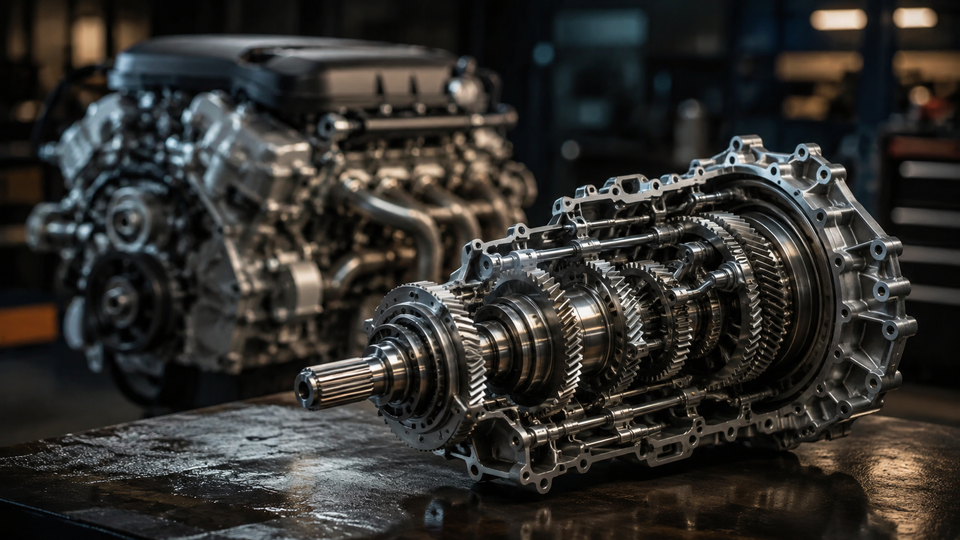
The Component Nobody Talks About
Walk through any motor show and one number dominates every conversation: horsepower. Manufacturers proudly advertise increasingly powerful engines, as though the history of automotive engineering consisted of a simple race towards larger numbers. Yet, while horsepower steadily increased during the past fifty years, mechanical engineers devoted an extraordinary amount of effort somewhere else entirely. They kept adding gears.
At first sight the decision appears almost irrational. A gearbox produces no energy, burns no fuel and contributes not a single additional horsepower. If performance genuinely came from power, another hundred horsepower should always outperform another ratio between sixth and seventh gear. Instead, generations of engineers invested billions refining a component whose only apparent purpose consists of sitting quietly between the engine and the wheels.
That choice deserves investigation because it contradicts one of engineering's oldest instincts: when a system struggles, build a bigger engine.
Respecting Reality Instead of Fighting It
Internal combustion engines possess an inconvenient characteristic. They do not perform equally well under every condition. Every engine has an operating range where torque delivery, fuel consumption, thermal efficiency and mechanical wear reach an unusually favourable balance. Outside that range the engine continues functioning perfectly well, but every kilometre costs more: more fuel, more heat, more cooling, more maintenance and, ultimately, more money.
The gearbox exists because engineers accepted reality instead of attempting to eliminate it.
Rather than designing an engine capable of remaining equally efficient everywhere, they built a mechanism capable of continuously adapting the relationship between the engine and the road. A motorway demands something different from a mountain pass. Urban traffic demands something different from a steep descent. The transmission continuously converts speed into torque and torque into speed, allowing the same engine to remain close to its most economical operating point despite constantly changing external conditions. It produces no energy of its own, yet quietly determines how much of the engine's energy becomes economically useful.
Stabilising the Economics
Another gear does not shorten the journey. It changes the economics of making it.
The destination remains identical. Customer value remains identical. Yet engine speed falls, fuel consumption decreases, temperatures remain lower, lubricants last longer and mechanical stress declines. Every litre of fuel never burned removes cost from multiple subsystems simultaneously. Lower temperatures reduce cooling requirements. Smaller cooling systems reduce weight. Lower weight reduces structural loads. Reduced loads extend component life. Longer service intervals lower lifetime ownership costs. One apparently insignificant component quietly changes the economics of the entire machine.
True Engineers rarely optimise machines because they admire elegance. They optimise economics.
The gearbox does not simply improve efficiency; it reduces the variability of operating costs by allowing the engine to remain productive under constantly changing conditions. Predictable fuel consumption, predictable maintenance intervals and predictable mechanical stress make the entire vehicle easier to manufacture, own and operate. The gearbox therefore becomes something more profound than a transmission. It stabilises the economics of the engine itself.
A Pattern Repeated Across Engineering
Once recognised, the same pattern begins appearing almost everywhere.
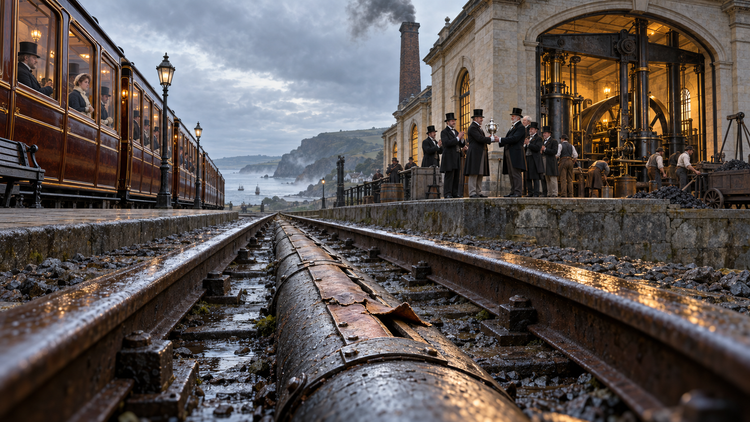
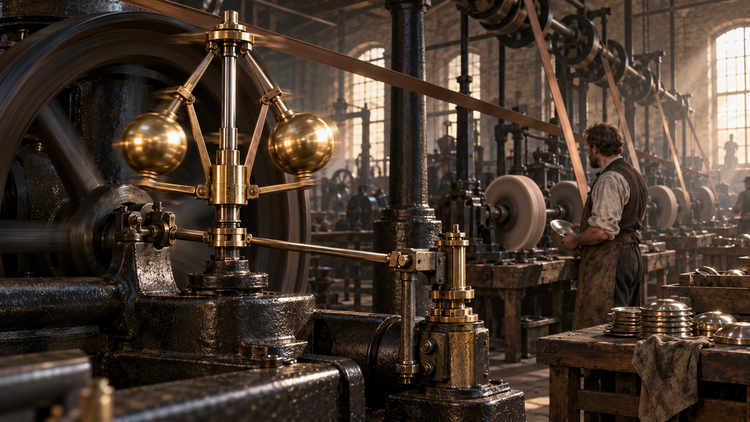
James Watt transformed steam power by preventing existing energy from being wasted rather than by burning dramatically more coal. Railway engineers learned that preserving momentum consumed far less energy than repeatedly recreating it after unnecessary stops. Aircraft designers often obtain greater lifetime performance by reducing drag than by increasing thrust because every percentage point of aerodynamic improvement accompanies every flight the aircraft will ever perform. Semiconductor manufacturers compete relentlessly on performance per watt because electricity, cooling and heat ultimately dominate the economics of computation far more than peak clock speed. Different technologies, separated by centuries, quietly converged on the same conclusion.
Mature engineering rarely asks how to produce more power. It asks why the system requires so much power in the first place.
The Corporate Horsepower Race
Technology organisations rarely suffer from a shortage of horsepower. Modern companies employ remarkably capable engineers, deploy virtually unlimited cloud infrastructure and increasingly possess computational capabilities that previous generations could scarcely imagine. Yet when delivery slows, the instinct remains remarkably consistent. Recruit more engineers. Add another platform. Introduce another abstraction layer. Increase cloud capacity. Deploy AI. Expand governance. Every intervention resembles fitting a larger engine into the same vehicle.
Mechanical engineers would approach the problem differently because every increase in power changes the economics of the surrounding system. A larger engine demands stronger mountings, heavier transmissions, larger brakes, improved cooling, more robust suspension and greater fuel capacity long before the driver experiences meaningful additional performance. Horsepower never arrives alone. It drags an ecosystem of additional costs behind it.
The same phenomenon quietly appears inside organisations. Every additional engineer increases communication paths. Every new platform expands operational responsibility. Every architectural abstraction demands maintenance. Every process created to coordinate previous complexity introduces another source of friction. The organisation appears more powerful while simultaneously consuming an increasing proportion of its own capability simply sustaining itself.
Mature engineering would ask a different question. Where does the existing power disappear?
That question often produces surprisingly uncomfortable answers. Sometimes hiring exceptional engineers creates greater leverage than hiring larger teams. Sometimes simplifying an architecture removes years of future operational effort. Sometimes a modular monolith outperforms a fashionable constellation of services because it stabilises the economics of change. Sometimes deleting infrastructure creates more value than expanding it. Sometimes choosing a managed service proves economically superior to proudly operating another internal platform.
Notice what these decisions have in common. None increases organisational horsepower. They simply reduce the amount of horsepower required to produce the same customer outcome. Mature engineering rarely begins with the largest engine available. It begins with the smallest engine capable of accomplishing the task economically, then redesigns the surrounding system so that engine spends most of its life operating efficiently. Oversized engines waste fuel. Oversized infrastructure wastes capital. Oversized teams waste coordination. In every case the system appears more capable while quietly becoming less economical.
Every one redesigns the gearbox.
Invisible Progress
Perhaps this explains why mature engineering disciplines gradually stopped admiring bigger engines. Their greatest advances rarely came from producing dramatically more power. They came from converting existing power more intelligently, adapting it more effectively and wasting less of it along the way. Another gear ratio. A better bearing. A cleaner wing. A lighter bridge. A more efficient condenser. Progress often arrives through mechanisms so inconspicuous that nobody notices them until entire industries begin behaving differently.
Engineering history rarely remembers the biggest engine of its generation. It remembers the inventions that allowed ordinary engines to accomplish extraordinary work while demanding fewer resources.
Organisations, by contrast, still tend to admire horsepower.
One wonders how many are still searching for larger engines while quietly overlooking the gearbox that would have changed everything.


Member discussion