Friday Fun — The Company of Theseus
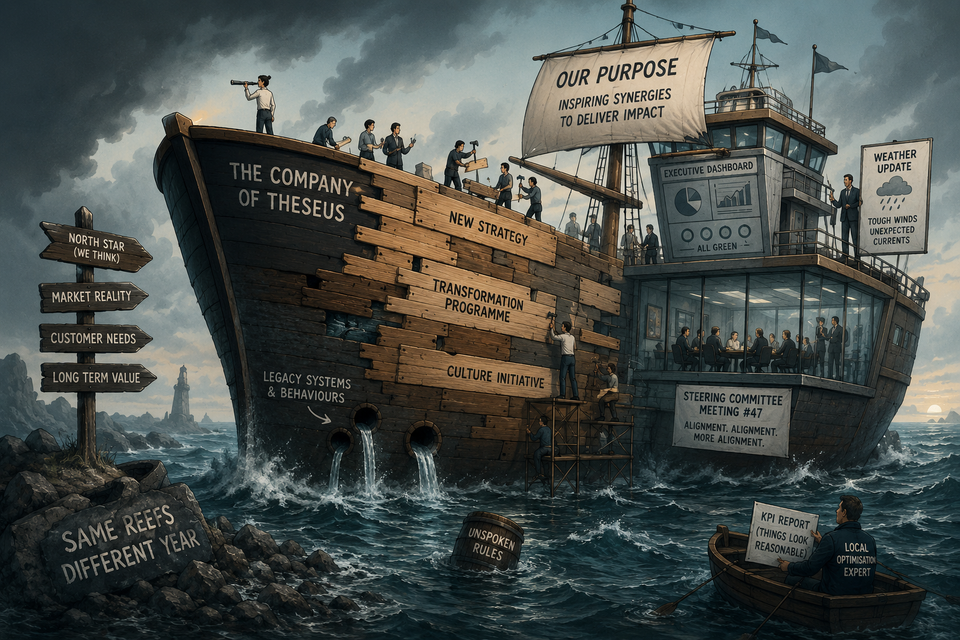
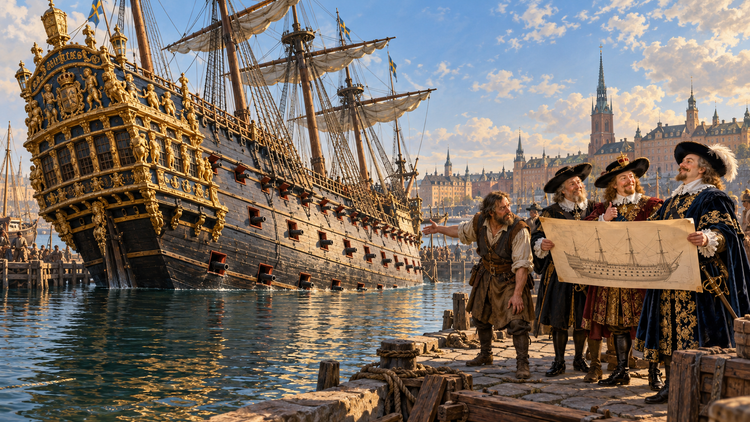
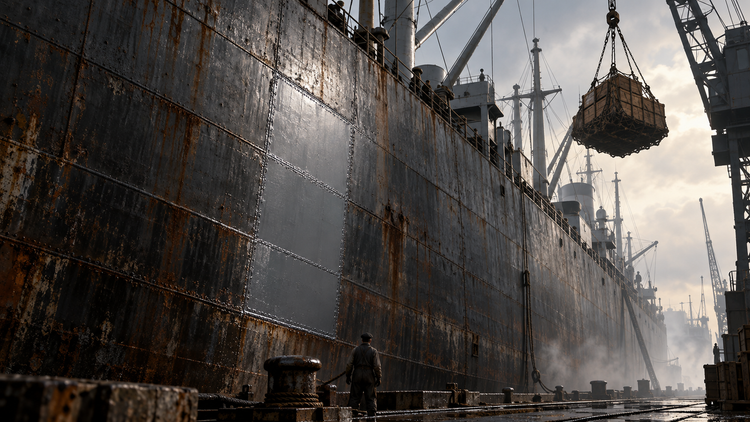
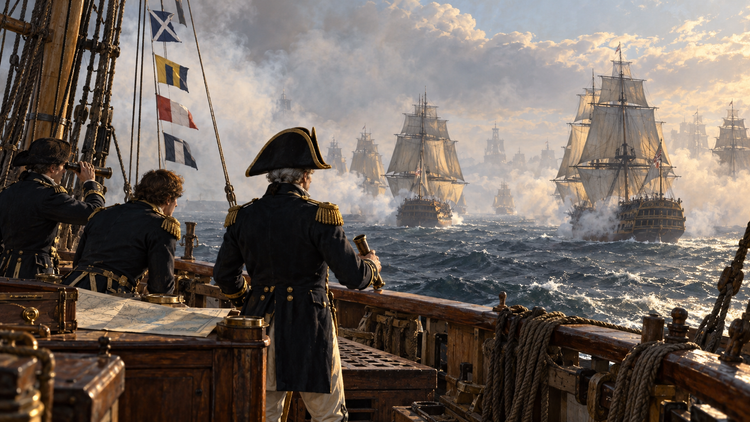
The Ship of Theseus is an old philosophical paradox. If one replaces every plank of a ship, every sail, every rope and every beam over time, does it remain the same ship?
Modern organisations accidentally answered the question long ago.
Replacing the Ship
Over the years companies replace almost everything around them. Leadership teams rotate. Engineers leave. Architectures evolve. Products disappear. Offices move. Processes mutate. Entire operating models rise and collapse under new names every few years. Even the language changes constantly. Yesterday came digital transformation, then agile transformation, then platform transformation, and now AI transformation. Some organisations manage to repackage the same confusion three times with different slide decks, a new vocabulary and an expensive transformation programme proudly named Horizon, Phoenix or Quantum.
Yet despite all these replacements, something remarkable survives with extraordinary resilience.
The same inability to prioritise. The same political games. The same dependency chaos. The same reporting theatre. The same fear of accountability. The same obsession with local optimisation regardless of customer impact. Teams change, tooling changes and structures change, but the underlying behaviour often survives untouched.
This forms the truly fascinating aspect of large organisations. Companies frequently replace the visible structure while preserving the invisible dynamics underneath it. Incentives remain identical. Fear remains identical. Internal power distribution remains identical. Survival behaviours remain identical. The ship changes shape while the currents underneath continue pulling it toward the same reefs. Entire crews spend years repainting the deck while the vessel quietly continues drifting toward the same rocks.
Modernisation Without Movement
One can observe this phenomenon particularly clearly during large transformation programmes. New captains arrive with promises of calmer waters, simplification and modernisation. Agile coaches appear. Platform teams emerge. Tribes, guilds and centres of excellence multiply across the organisation like decorative plants in an airport lounge. Nobody fully understands who waters them anymore, but removing one apparently creates political instability. Soon the vocabulary shifts entirely. Every presentation suddenly contains words such as enablement, empowerment, scalability and acceleration.
Meanwhile the operational reality barely moves, although several dashboards now confirm impressive progress against strategically selected indicators. In some organisations the bridge no longer navigates the ship. It merely explains the weather after each collision.
The company installs an entirely new propulsion system while still requiring six officers and a steering committee nobody remembers creating before changing direction by three degrees. New compartments spread across the ship while nobody remains responsible for the actual voyage from one end to the other. New navigation charts appear everywhere while each deck quietly optimises for its own survival during the next storm. AI copilots enter the workflow while half the organisation still cannot define success in measurable terms. The company now generates executive summaries of confusion at unprecedented speed.
The planks changed. Navigation did not.
When Identity Starts to Dissolve
At some point the paradox becomes existential. The founders disappeared years ago. The original engineers left long ago. The first architecture vanished under successive rewrites. Customers evolved. Markets shifted. Even the mission statement changed several times. Yet people inside the organisation continue speaking about the company as if some immutable identity still connected every era together.
- “We have always been innovative.” Usually right before announcing a reorganisation inspired by a competitor that laid off 12,000 people three months later.
- “We have always been customer centric.”
- “This is how we do things here.”
Nobody fully remembers when “here” actually started.
Unlike the original philosophical paradox, organisations do not consist solely of structures and objects. People carry operational memory, habits, instincts and informal trust networks. They transmit the invisible knowledge that rarely appears inside documentation, frameworks or reporting lines.
A company rarely loses itself when the architecture changes.
It loses itself when the people carrying its coherence, memory and purpose quietly disappear faster than the organisation can transmit what mattered.
At that point the structure may continue operating for years while the underlying identity slowly dissolves. Processes survive. Meetings survive with terrifying resilience and reproduce faster than the delivery organisation itself. Reporting survives in multiple incompatible formats, each carefully designed to reassure a different layer of management. Sometimes even profits survive. Meaning, however, becomes far more difficult to preserve.
Ironically, fragments of the original organisation often survive in unexpected places. A forgotten operational team still understands the customers better than the reporting structure above them. One senior engineer still remembers why certain constraints exist. An old support group quietly preserves institutional memory while entire departments rotate around them. A few delivery habits continue producing value without attracting executive attention because they operate outside the theatre of transformation. Discovering them too early would risk assigning them to a task force.
These fragments resemble archaeological remains buried under layers of frameworks, governance models and strategic programmes. Occasionally one discovers that enough functional pieces still exist to rebuild a healthier company from scratch. Usually hidden in a corner occupied by three exhausted operational people and a spreadsheet everybody pretends not to depend on. The idea sounds absurd until one spends enough time inside large enterprises.
Preserving the Wrong Things
The tragedy of many modern organisations does not come from an inability to change. In reality most companies change constantly. Reorganisations follow one another endlessly. Crews rotate. Names evolve. Navigation systems migrate. Processes multiply like barnacles attached to the hull. New strategies replace previous strategies before the previous ones fully reached production.
The deeper problem comes from preserving the invisible conditions that generated the dysfunctions in the first place. Certain structural leaks survive for decades because too many cabins quietly depend on the water flow.
A company can modernise its tooling while preserving fear.
It can flatten hierarchies while preserving politics.
It can accelerate deployments while preserving confusion.
It can adopt every fashionable framework in existence while preserving the inability to connect work to customer value. Some organisations even manage to scale confusion globally while proudly calling it alignment.
Eventually the organisation begins to resemble a ship rebuilt a hundred times with modern materials while still leaking from the exact same places.
From the outside the vessel looks impressive. Fresh paint covers the hull. AI banners hang from the mast. Dashboards glow across the bridge with metrics nobody fully trusts but everybody politely discusses during steering meetings. Yet underneath the surface, the same structural weaknesses continue travelling quietly from one generation of leadership to the next.
The company changed almost everything.
Unfortunately, nobody stopped long enough to ask whether the ship still knew where it was sailing.
Member discussion