Wednesday Reality: Success Creates Its Own Barbarians
The Age of Builders
Civilisations do not begin with administration.
They begin with constraints.
Food must be grown. Stone must be quarried. Roads must be built. Rivers must be crossed. Goods must move. Energy must be generated. The earliest generations of any successful civilisation spend remarkably little time discussing abstractions because reality leaves them little choice.
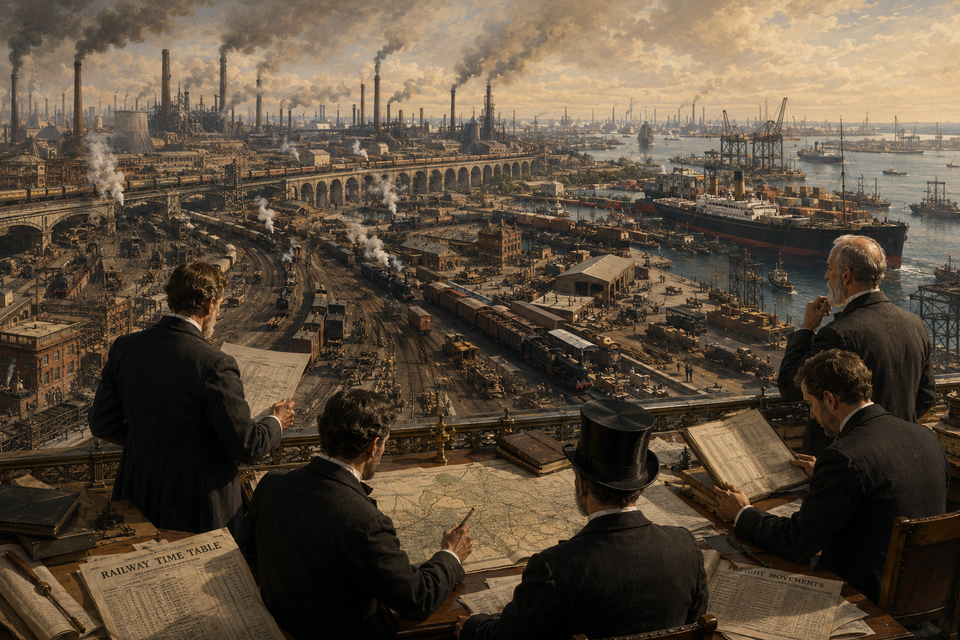
The Roman engineer surveying a route through Gaul was not debating governance structures. He was confronting gradients, rivers, weather and distance. The merchant funding a new harbour was not refining reporting systems. He was attempting to connect markets. The railway engineers of nineteenth-century Britain were not designing management frameworks. They were trying to solve a practical problem: how to move coal, steel, people and goods faster and further than existing infrastructure allowed.
Civilisations are built by people wrestling with physical constraints.
History remembers the monuments they leave behind. Roads. Ports. Railways. Factories. Power stations.
What history often forgets is that these systems were not built because they were interesting.
They were built because they were necessary.
The Britain entering the 19th century was already experiencing extraordinary industrial growth. Coal production expanded relentlessly. Ironworks multiplied. Textile manufacturing transformed entire regions. Liverpool became one of the most important ports in the world.
Yet prosperity revealed a weakness. Britain could produce more than it could move.
Factories expanded faster than transportation networks. Mines extracted more coal than local markets could absorb. Ports connected Britain to global trade, yet vast areas inland remained constrained by geography. Distance remained an economic force.
The canal age provided a temporary answer. Projects such as the Bridgewater Canal dramatically reduced transportation costs and helped fuel industrial growth. Investors rushed to finance new waterways. Freight moved more efficiently than before.
For a time, canals appeared revolutionary. Then industry expanded again.
The more productive Britain became, the more transportation capacity it required. Every solved constraint exposed another. Every improvement created demand for further improvement.
The railway emerged from that reality. Not because Britain desired innovation. Because Britain required capability.
When the Railway Became Civilisation
Modern discussions often describe railways as a transportation technology, but Victorian Britain experienced something far larger than an improvement in travel. The railway altered the productive capacity of an entire nation by changing how resources, labour, capital and markets could interact with one another.
Coalfields became connected to foundries, foundries became connected to factories, and factories became connected to ports. Markets that had previously been regional became national, while entire industries reorganised themselves around the possibilities created by the network. What had once been constrained by geography could now operate at a scale that had previously been impossible.
Liverpool and Manchester illustrate the point. Both cities already existed, trade already existed, and industry already existed. The railway did not create these things from nothing. Instead, it transformed the relationship between them by reducing the practical significance of distance and increasing the importance of scale. Goods could move more quickly, more reliably and in greater volumes, allowing businesses to coordinate activity across much larger areas than before.
As a result, the railway did far more than make journeys faster. It expanded what Britain could accomplish as an industrial economy. This distinction helps separate transformative infrastructure from ordinary technology. Transformative infrastructure changes the range of possibilities available to a society. The Roman road network expanded the reach of the Empire, the railway expanded the reach of industry, electrification expanded the reach of production, and containerisation expanded the reach of global trade. In each case, the productive foundation changed what society was capable of doing, and the consequences spread outward into every other aspect of economic life.
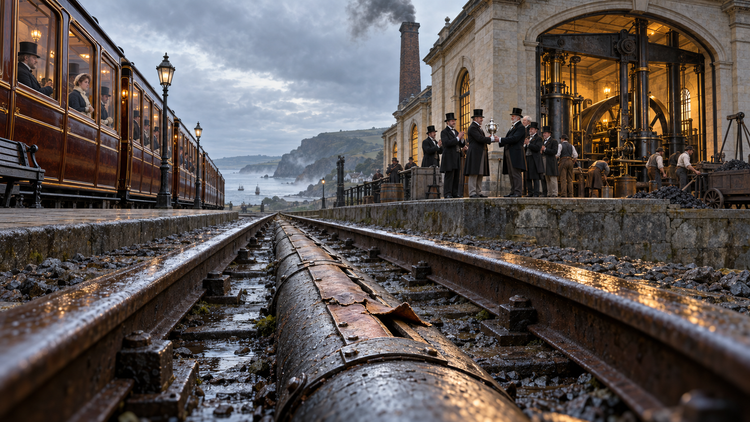
By the middle of the 19th century Britain had become a railway civilisation. Cities expanded around stations, land values shifted, industrial centres grew where connections existed, and capital flowed towards railway construction at extraordinary scale. The network became woven into the structure of the economy itself.
Railway Mania is often remembered primarily as a speculative bubble, and there is truth in that description. Investors poured money into projects that could never justify their valuations, and many fortunes were lost when expectations collided with reality. Yet the more important historical fact is what remained after the speculation disappeared. The tracks, bridges and tunnels continued to exist. The infrastructure survived the financial excess that accompanied its construction, and the productive foundation that had been built continued to shape Britain's development long after the mania had ended.
When Success Becomes Invisible
Perhaps the most fascinating aspect of successful systems is that they gradually disappear from view. Infrastructure that once inspired awe eventually becomes background scenery, noticed only when it fails. Freight rail attracts little attention while supermarket shelves remain stocked. Electrical substations rarely enter public consciousness while homes and businesses remain powered. Ports operate largely unnoticed while supply chains continue delivering goods across continents.
This invisibility is not a sign of unimportance but of success. The more reliably a system performs its function, the less attention people devote to it. What was once recognised as a remarkable achievement becomes accepted as part of the natural order.
The railway followed this pattern. Early rail travel was a technological marvel that captured the Victorian imagination, but over time it became ordinary infrastructure. People stopped thinking about the engineering challenges that made it possible and instead came to regard rail transport as an expected feature of modern life. The same process has repeated itself with roads, electrical networks, telecommunications systems and countless other foundations of prosperity.
This transformation matters because it changes how successive generations relate to the systems they inherit. The generation that builds a network understands the constraints it was designed to overcome. The generation that grows up with that network often experiences it as a permanent feature of the environment rather than as a hard-won solution to a difficult problem.
Containerisation provides a striking example. It may be one of the most important developments in modern economic history, yet it receives remarkably little public attention. Before the standard shipping container, cargo had to be loaded and unloaded manually, making ports slower, more expensive and less predictable. International trade existed, but at a far smaller scale and with far greater friction. Standardised containers dramatically reduced costs, increased reliability and helped create the global trading system that now underpins modern economies.
Despite its enormous impact, containerisation remains largely invisible to the people who benefit from it. Most consumers encounter the products made possible by global logistics without ever considering the infrastructure that delivered them. As a result, the productive foundation fades from view while attention shifts toward the more visible products, brands and technologies that sit on top of it.
The Rise of the Timetable
Every successful productive system eventually generates a coordination layer.
As productive systems expand, they become more difficult to operate through direct observation alone. Information must travel further. Decisions must be synchronised across larger distances. Activities that were once coordinated informally require dedicated mechanisms to keep the whole system functioning.
The history of the railway illustrates this clearly. Early railways could operate with relatively simple procedures because networks were small and traffic volumes were limited. As lines multiplied and trains moved across increasingly interconnected routes, signalling systems became essential. Timetables, operating rules and control centres emerged not because they were the purpose of the railway, but because they were necessary to manage its growing complexity.
The same pattern appeared in electrical networks. Small local generating systems required relatively little coordination. National grids, by contrast, demanded sophisticated dispatch centres capable of balancing supply and demand across entire regions. Aviation followed a similar trajectory. As air travel expanded from a novelty into a global transportation system, air traffic control became indispensable for managing the movement of thousands of aircraft safely and efficiently.
Large organisations experience the same evolution. Planning systems, reporting structures, budgeting processes and performance metrics arise because coordinating thousands of people is fundamentally different from coordinating dozens.
None of this is surprising, and none of it is inherently problematic. Complex systems require coordination systems.
The difficulty emerges when the coordination layer becomes more visible than the productive activity it exists to support.
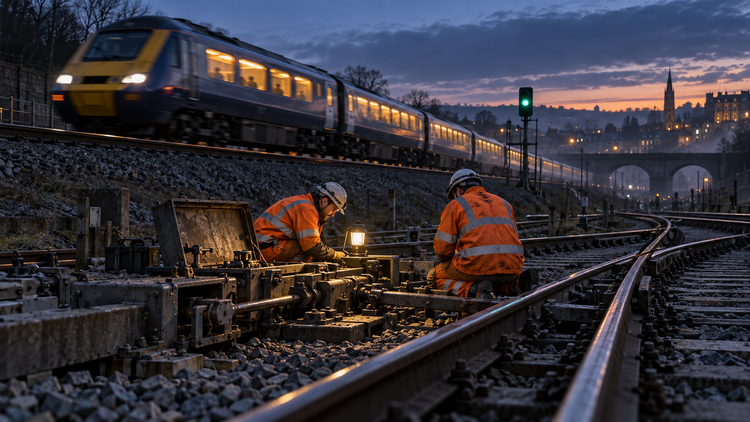
The railway generated the timetable. The timetable was a response to the existence of the railway network and the operational challenges it created. Yet over time it becomes possible to focus on the timetable itself. To discuss schedules, delays, compliance and reporting, without paying equal attention to the tracks, locomotives, maintenance crews and infrastructure that make movement possible in the first place.
A similar dynamic can be observed elsewhere. The American Society of Mechanical Engineers was founded in the 19th century because industrial expansion created genuine engineering challenges that demanded practical solutions. Its early members were concerned with boilers, engines, materials, manufacturing processes and the physical realities of industrial production. Over time, however, every mature profession accumulates standards, committees, accreditation systems, conferences and administrative structures. These developments serve important purposes, but they are secondary to the productive activity that justified their existence.
History repeatedly demonstrates how easy it is for attention to migrate from the underlying system to the mechanisms created to coordinate it.
Coordination systems are often more visible than productive systems. Schedules can be discussed in meetings. Reports can be presented to executives. Metrics can be reviewed on dashboards. Administrative processes can be documented, audited and refined.
The productive foundation is frequently less visible precisely because it is functioning.
The stage remains hidden behind the performance.
The Theatre of Civilisation
Successful societies gradually accumulate layers.
They begin with production: the activities that create food, energy, goods, infrastructure and services. As those activities expand, they require coordination. Larger systems need schedules, standards and mechanisms for synchronising effort across greater distances and larger numbers of people. Administration follows naturally, providing rules, procedures and structures that allow increasingly complex organisations to function. Measurement emerges to track performance, allocate resources and identify problems. Finally, societies develop sophisticated forms of representation that describe, model and communicate what is happening within the system.
Each layer emerges for a legitimate reason, and each solves a genuine problem created by the success of the layer beneath it.
The danger is not that these layers exist. A modern civilisation could not function without them. The danger arises when attention gradually shifts away from the productive foundation and towards the systems that describe, coordinate and manage it.
Civilisations begin by confronting reality directly. They build roads because transportation is difficult. They construct power stations because energy is scarce. They develop factories because production capacity is limited. Over time, however, successful societies often become increasingly fascinated by representations of reality rather than reality itself.
A timetable describes movement, but it is not movement. A report describes performance, but it is not performance. A dashboard may provide a detailed picture of a business, yet it is still only a picture. These tools are valuable because they help people understand complex systems, but they remain distinct from the underlying activity they are intended to represent.
Information technology occupies a particularly interesting place within this story. Computing is perhaps the most sophisticated coordination system humanity has ever created. It excels at communication, measurement, modelling, reporting and administration. Entire industries now depend upon its ability to process information at extraordinary speed and scale.
Its power is undeniable, but its nature is also revealing. Computing primarily operates in the world of representation. It gathers information about reality, organises it, analyses it and presents it in forms that humans can use. In doing so, it dramatically improves our ability to coordinate productive activity.
What it does not do is eliminate the need for that activity.
A railway still requires tracks, maintenance and rolling stock. A port still requires ships, cranes and cargo. A factory still requires materials, machinery and workers. An electrical grid still requires generation, transmission and physical infrastructure. Technology can amplify productive systems, optimise them and connect them more effectively, but it does not become the productive system itself.
Yet modern societies increasingly celebrate the theatre surrounding production while taking production itself for granted. The visible layers of management, reporting and digital representation often attract more attention than the physical systems that sustain prosperity. As those foundations become more reliable and less visible, it becomes easier to forget that everything represented on a screen ultimately depends upon something real being built, moved, generated or produced somewhere beneath it.
The Heirs
This is where the pattern becomes uncomfortable.
The generation that builds the railway understands the railway because it has lived with the constraints that made the railway necessary. It remembers the delays, the bottlenecks, the costs and the limitations that existed before the network was built. The railway is not an abstraction to them. It is a solution to a problem they experienced directly.
The generation that inherits the railway encounters a different reality. The tracks already exist. The stations already operate. The network is taken for granted. Their attention naturally shifts towards coordinating, managing and optimising what has already been created. They become experts in schedules, planning and administration because those are the challenges most visible in their environment.
Neither generation is foolish, and neither lacks intelligence. The difference is that one stands closer to necessity while the other stands closer to inheritance.
The same pattern appears repeatedly throughout history.
The Romans who built roads understood logistics because they were solving the practical problem of moving armies, supplies and information across vast distances. Their descendants inherited a transportation network that already existed and increasingly experienced it as part of the normal landscape.
The industrialists who built factories understood production because they spent their lives confronting the realities of machinery, labour, materials and output. Their descendants inherited productive systems that appeared stable and permanent.
The engineers who built infrastructure understood constraints because constraints dominated their daily work. Their successors inherited capability and often focused their attention on coordinating and administering what had already been achieved.
Prosperity creates distance from necessity. As that distance grows, abstraction becomes easier. People spend less time confronting the underlying realities that made success possible and more time interacting with representations of those realities. Over time, the representation can become more familiar than the thing being represented.
This is what makes successful civilisations vulnerable.
The danger is not that intelligence disappears. The danger is not that enemies suddenly appear at the gates. The danger is that success produces generations who inherit systems they no longer fully understand because they have never needed to build them.
In that sense, the barbarian is often not an outsider arriving from beyond the frontier. He is the successor who inherits a functioning system without understanding the conditions that created it.
He understands the report but not the factory that generates the numbers. He understands the schedule but not the track that makes the schedule possible. He understands the representation but has become increasingly distant from the reality being represented.
The Question Beneath the Curtain
Civilisations do not collapse because they develop theatre. Theatre is an inevitable consequence of scale. As systems grow larger and more complex, they require coordination, measurement, communication and administration. The timetable follows the railway. The report follows the factory. The dashboard follows the customer.
None of these developments are inherently problematic. In fact, they are often signs of success.
The problem begins when attention shifts so completely towards the theatre that people forget there is a stage beneath it. Coordination starts to appear more important than production. Measurement starts to appear more important than capability. Representation starts to appear more important than reality.
History suggests that many successful societies eventually approach this point. Some recognise the danger and reconnect themselves with the productive foundations that sustain them. Others continue to optimise the representations while neglecting the underlying systems on which everything depends.
The uncomfortable question is therefore not whether our organisations produce theatre. Every large organisation does.
The more important question is whether we would recognise the difference if the theatre gradually became more important than the production it was originally designed to serve.



Member discussion