Friday Fun : The Ship Was Ready. The Water Had Concerns.

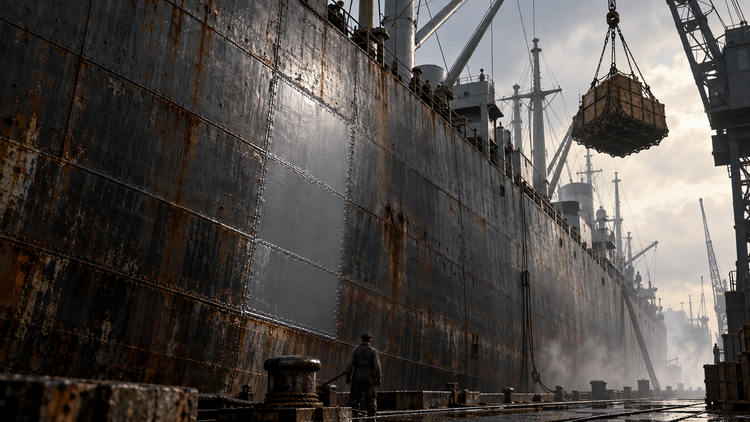
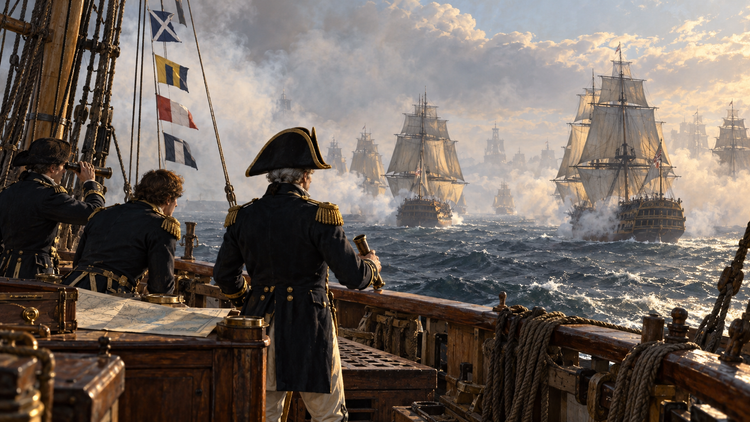
In the summer of 1628, Stockholm had something worth coming down to the waterfront to admire. Vasa carried sixty-four cannon, and a single broadside could throw roughly 250 kilograms of ammunition towards another ship. This offered Sweden a substantial improvement in the conduct of international relations, particularly when compared with sending someone to explain the situation politely. From the quay, the vessel presented a persuasive argument. Most of the objections lay below the waterline.
Building such a vessel demanded extraordinary practical knowledge. Shipwrights shaped timber into a hull capable of carrying immense loads. Riggers arranged ropes and spars to harness the wind. Guns required secure mountings on decks that would move beneath their crews. These crafts had to cooperate under changing forces, far from anywhere convenient to undertake repairs. The achievement deserves respect before the familiar shipwreck makes everyone retrospectively qualified to supervise seventeenth-century naval construction.
The difficulty lay in arranging all this capability so that the vessel could remain upright while using it. Weight acted downwards through the centre of gravity. Buoyancy acted upwards through the centre of the displaced water. As the ship heeled, the submerged hull changed shape, shifting the centre of buoyancy. The resulting turning effect could restore the vessel towards upright or contribute to further heeling. Excellent workmanship could realise a design. It could not negotiate an exception to its geometry.
Ballast placed weight low in the hull, helping stability, but also increased draught. Openings intended to remain above water consequently moved closer to it. A remedy in one dimension could consume the margin in another. The water assessed the assembled arrangement, displaying none of the professional courtesy that might have allowed each craft to receive a separate satisfactory rating.
The test develops an attitude
Vasa’s builders worked before the mathematical methods that later naval architects would use to predict stability. Experience carried much of the burden. Unstable new warships sometimes underwent alterations, including changes to armament or reductions in height. An unsatisfactory first configuration need not condemn a vessel, provided she survived long enough to acquire a second.
Before Vasa sailed, thirty men ran back and forth across her deck while Vice Admiral Klas Fleming watched. The rolling became so alarming that the demonstration stopped for fear of capsizing the ship at the quay. This supplied useful evidence about stability, although anyone reporting participation could also have recorded a successful afternoon. Thirty people attended, everybody contributed, and the exercise generated actionable feedback without losing the test environment.
The demonstration stopped, but preparations for departure continued. On 10 August 1628, Vasa sailed, heeled under gusts and took water through her open lower gunports. She sank after travelling about 1,300 metres. Around thirty people died, many trapped inside the vessel. A warning serious enough to halt men running across a deck had failed to prevent the ship carrying people out into the harbour.
The warning receives executive support
The historical record does not supply a modern programme review. For that, we must leave Stockholm and enter an imaginary organisation whose software platform has failed under an ordinary operating load. Engineers report that it cannot reliably process the expected volume. Their report contains measurements, reproduction steps and a recommendation to postpone release. At this stage, the warning remains dangerously easy to understand.
During the first review, the finding becomes a performance concern. This sounds reasonable because the system does perform, occasionally with considerable encouragement. Further up, it becomes a capacity risk with mitigation underway. Someone has arranged a meeting about mitigation, giving the description a defensible relationship with reality. By the executive review, the programme remains on track, subject to final operational readiness. The ship has not changed, but its reporting characteristics have improved considerably.
Nobody needs to invent a result. Each layer adds context, removes detail and selects language appropriate to its audience. Engineers describe behaviour. Programme managers describe implications for delivery. Executives receive a judgement about whether intervention requires their attention. Somewhere along that journey, evidence about what the system cannot do becomes an assurance about what the organisation intends to do about it.
The engineer may attend the review and discover that their warning has received broad support. Everyone thanks them for raising it. The risk register contains an entry. A sponsor confirms that quality remains paramount. The release date survives untouched, having apparently attended under diplomatic immunity. When the engineer repeats that the service cannot sustain the load, someone asks whether they have considered a more pragmatic approach to the evidence.
The date acquires buoyancy
By now, postponement has become an expensive organisational act. Customers expect the release. Sales has made commitments. Another programme depends on it. Budgets assume completion this quarter. Previous reports have expressed enough confidence that revising them would require explaining how confidence accumulated while capability did not. The date now carries considerably more institutional support than the system.
The costs also have different shapes. Delay causes immediate, visible trouble. Someone must call a customer, revise a forecast or explain a missed commitment. Proceeding exposes the organisation to future operational trouble whose extent remains uncertain and whose ownership may fall elsewhere. Each participant can therefore find a locally respectable reason to support a collectively dangerous course.
Stopping the release may require a named person to overrule the plan. Continuing may require only that nobody does. The concerned party must prove that the evidence deserves to interrupt everything already arranged around departure. Eventually someone questions whether the test conditions were representative. In our imaginary shipyard, thirty men running across a deck would provoke a thoughtful discussion about whether customers had contracted for running.
Yet a stability demonstration need not reproduce an entire voyage to reveal a weakness. Its value comes from applying a disturbance and observing the response. Weather will supply different disturbances, with less notice and no obligation to stop when the admiral looks uncomfortable. Discrediting the rehearsal does remarkably little to improve the vessel.
The harbour becomes a support function
The launch proceeds with temporary measures. Engineers watch the service. Operations checks the queues. Customer support receives guidance on recognising the known issue, carefully phrased to avoid suggesting it had been known before customers encountered it. An experienced developer stays available during the evening. The service runs, supported by a small human civilisation.
At seven that evening, the developer eats dinner beside an open laptop, clearing failed transactions between mouthfuls. A message arrives thanking everyone for their contribution to the successful launch. They acknowledge it, restart a worker and return to a meal now entering its own extended support period. Tomorrow’s celebration includes cake. Their invitation asks about dietary requirements but leaves availability assumed.
The project has delivered. Remaining effort belongs to hypercare, support or business operations. Manual reconciliation no longer counts as unfinished engineering because somebody outside engineering performs it. A developer spending every morning restarting failed jobs becomes part of the operating model. The programme celebrates completion while another department quietly recruits enough people to keep it completed.
Delivery expenditure falls as the project closes. Operational expenditure rises elsewhere, in smaller increments under less conspicuous headings. Customers contribute unpaid labour through duplicate entry, repeated calls and spreadsheet workarounds. The service appears viable because other systems, including the customer’s patience, have begun carrying it. The launch has moved the cost into places the launch report does not measure.
Hypercare then acquires a recurring meeting, a reporting template and people who joined after it began. Ending it becomes difficult because the service depends on the assistance that made launch possible. Extending it sounds prudent. Eventually someone proposes a transition to normal operations, principally by changing the meeting’s name.
The pumps receive excellent feedback
A ship can carry pumps for perfectly sound reasons. Seams leak, spray comes aboard and crews need ways to remove unwanted water. But pumping water out does not necessarily correct the condition that admitted it. Where inadequate stability allows an opening to submerge, successful pumping and satisfactory stability answer different questions. A dry bilge at noon says little about what the next gust will demand.
Production recovery creates a similar ambiguity. Restoration rightly takes priority while customers wait. Teams restart components, clear queues and reconcile records. Once service resumes, pressure falls and planned delivery reclaims attention. The weakness remains, now accompanied by a tested recovery procedure and reassuring evidence that the organisation can respond.
Experienced staff become extraordinarily skilled at keeping the arrangement upright. Their knowledge grows essential, difficult to document and dangerous to lose. When they request time to remove the failure mechanism, the organisation hesitates because it needs them available to manage failures. Their competence gradually restricts their freedom to improve the system.
At the next capacity review, this work may appear as an unfortunate interruption to delivery. The people holding the service together receive questions about why their project estimates keep slipping. Someone proposes protecting their focus by introducing a rota, which distributes the pumping more fairly while preserving the hole. The improvement receives an owner, a target date and a modest recruitment request.
There are legitimate reasons to launch with limitations. Restricted exposure, monitored behaviour and practical recovery can make a release a useful experiment. What matters here concerns what the resulting evidence establishes. When additional staffing carries the workload, successful operation demonstrates the capability of the combined arrangement. Remove those people and the original engineering proposition remains unproven.
That distinction can disappear during reporting. Extra staffing enables launch. Launch demonstrates success. Success confirms that the original concern received appropriate treatment. The intervention becomes evidence that the underlying design never needed changing. Had the thirty men possessed this machinery, they might eventually have inherited a workstream on reducing avoidable lateral movement.
An inquiry with excellent availability
After Vasa sank, investigators examined the crew’s sobriety, the securing of the guns and the ship’s proportions. Testimony also brought attention to the king’s approval of the design. Nobody ultimately received punishment. Much of the blame settled on the original shipwright, Henrik Hybertsson, who had died before the voyage and faced understandable difficulties attending follow-up discussions.
Modern inquiries can show a similar preference for explanations with limited capacity to reply. A departed supplier, an earlier leadership team or a retired platform provides useful specificity without troubling too many current relationships. Meanwhile, the investigation receives permission to revisit assumptions that a warning could barely mention. Questions once considered disruptive return as evidence of thoroughness, now accompanied by a considerably larger budget.
The final report may describe a failure to escalate. The engineer who supplied the measurements reads this with interest. Their warning reached every relevant meeting, acquired an owner and appeared in the pack that approved departure. Its journey through the hierarchy can be reconstructed in considerable detail. The report recommends improving communication, and the engineer receives an invitation to help design the template.
Vasa returned to the surface in 1961, after 333 years underwater. Visitors can now examine the extraordinary craftsmanship and the proportions that could not sustain it, preserved together in the same vessel. Somewhere, an imaginary programme office still records a successful departure. The water remains with operations.

Member discussion