The Ruthless Landscape: Antifragility Beyond Empathy
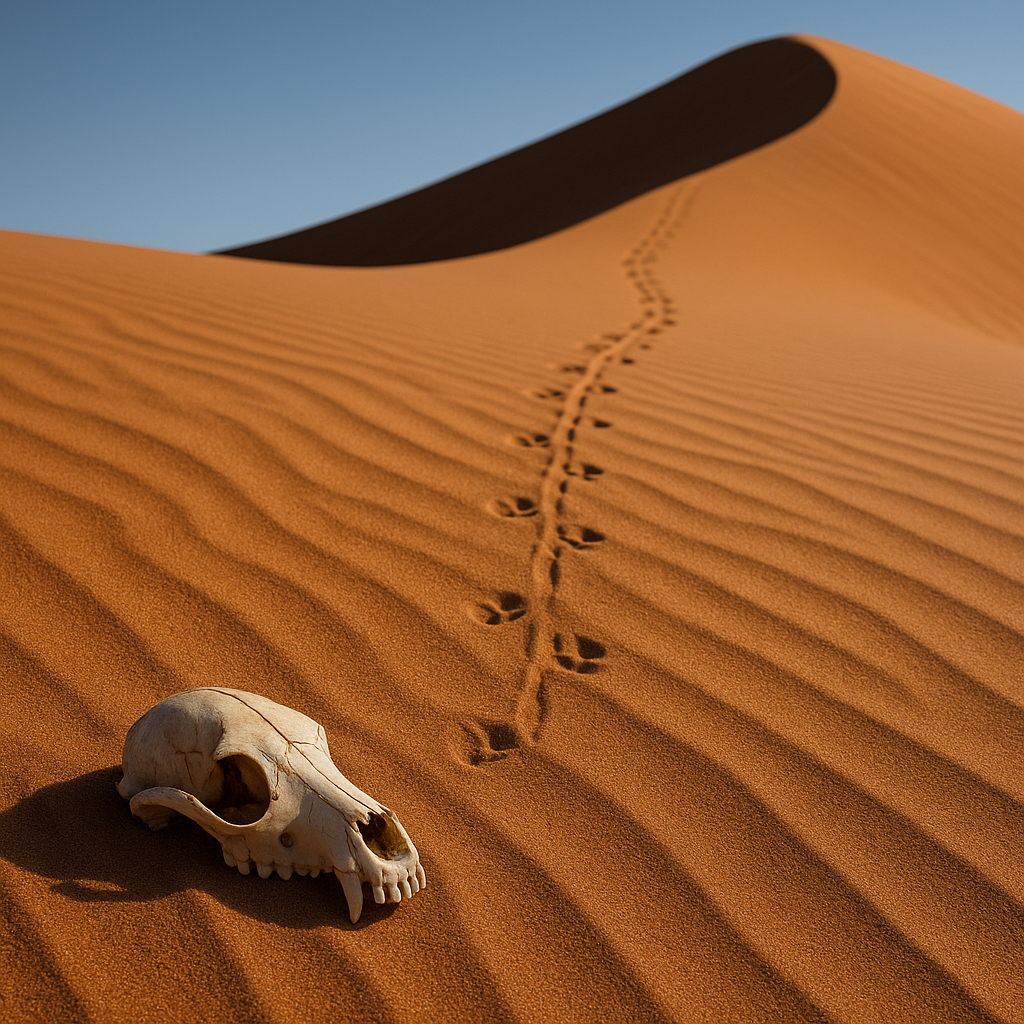
“It is not the strongest of the species that survives, nor the most intelligent, but the one most responsive to change.” — Charles Darwin
In business, we love the vocabulary of strength. We talk about resilience, toughness, grit, and, thanks to Nassim Nicholas Taleb, antifragility. Yet most corporate interpretations of antifragility are comfortable distortions, often propagated by leaders who project softness and self-congratulation, convincing themselves and others they are antifragile while in fact avoiding real stress or consequence.
They forget that the concept was never meant to make individuals feel good about hardship. It was designed to explain how systems evolve by letting their components fail. The antifragile organism is not kind, nor fair: it simply grows by shedding what no longer fits.
This misunderstanding matters because it leads to dangerous behaviour. Many leaders equate antifragility with endurance, assuming that a team or a person grows stronger under stress. However, Taleb’s argument is colder and far more radical. In nature, systems strengthen not because individuals adapt, but because some do not. The weak perish, the fit survive, and the information of failure becomes part of the environment.
Evolution is the engine, and its fuel is loss.
A healthy organisation learns from this without imitating its cruelty. It recognises that volatility and friction reveal structure. When small failures occur, they offer feedback that can make the system wiser. Suppressing all stress removes the very signals that would help it evolve. Yet the opposite mistake, celebrating chaos as progress, leads to ritualised fragility. Many companies now host post-mortems, “fail-fast” workshops, or resilience programmes that look reflective but change nothing. The ceremony replaces the lesson.
Ruthless Evolution and Its Misreadings
In nature, ruthless evolution is indifferent, not malicious. It selects for fitness, not moral worth. Organisms die, but their lineage benefits. The system learns because failure has consequences. As Taleb notes, evolution itself operates through endless trial and error, millions of local experiments that collectively produce progress. Nature keeps what works and discards what does not.
Most companies reverse this logic: they make a few large, centralised bets and call them strategy. Evolution is antifragile because it learns from many small deaths while corporations remain fragile because they fear even one. In the corporate world, however, this dynamic is easily corrupted. When leaders invoke “ruthless evolution,” they usually mean staff reduction, pivot theatre, or performative churn. Yet there is an opposite distortion too: the progressive habit of giving gifts endlessly, rewarding symbolic heroes, or cushioning every consequence with subsidies and sentiment. This culture of constant protection weakens the system just as much as excessive cruelty, for it blurs feedback and erases accountability.
Without capturing the knowledge of failure, both cruelty and comfort become forms of decay. The system forgets everything except how to repeat its mistakes with new faces.
True antifragility is ruthless towards design flaws, not people. It punishes weak interfaces, obsolete processes, and bloated bureaucracy, but it must protect the curiosity, skill, and feedback loops that enable adaptation. To confuse toughness with blindness is to kill the evolutionary advantage. Systems grow when leaders eliminate bad mechanisms, not good people.
Let ideas die, not people.
This principle draws a line between natural ruthlessness and human cruelty. Nature’s indifference cannot be replicated ethically, but it can be translated into design: structures that allow adaptation to occur without personal devastation. A good organisation absorbs environmental shocks while protecting human dignity. A bad one copies nature’s indifference and calls it strength.
The Indifferent Landscape
Ruthlessness, in Taleb’s sense, is structural. The environment moves, and it does not care about how we feel about it. Markets evolve, technologies expire, and cultural expectations shift. The company that built its identity around one era’s stability will find itself displaced by the next, fit on one iteration, unfit on the next cycle. The landscape changes, indifferent to comfort or nostalgia, a principle often summarised as “you live it or you leave it,” as mentioned in a recent article.
A healthy organisation accepts this, and employees must do so as well. They must recognise that adaptation applies to them as much as to the system itself. Those who resist the motion of the landscape risk becoming unfit for the next cycle. It does not fight the environment’s motion. It learns to surf it. When people leave, when teams dissolve, or when products fade, these are not failures of morality, only consequences of misalignment with the landscape. The organisation’s duty is to turn these events into information.
The system grows by shedding what no longer fits its changing terrain.
Unfortunately, most companies interpret this indifference as a leadership style rather than a natural law. They imitate the landscape’s coldness and mistake it for discipline. Real strength lies elsewhere: in designing systems that can evolve without requiring cruelty.
As Taleb observes, the airline industry grows stronger because every failure, however small, is analysed and shared, while banking grows weaker by hiding its near-misses until they become disasters. The same distinction applies to organisations: those that expose stress early adapt, while those that hide it collapse. The lesson is visible even in modern business giants. Apple once defined itself by the personal computer, but when the environment shifted, it did not defend its identity. I§t redefined it around mobility. In doing so, it sacrificed its old core to gain a new ecosystem. This is antifragility in practice: the system learns faster than it dies. If adaptation depends on pain, the system was poorly designed.
Ecological Ruthlessness
In ecosystems, decay sustains growth. Death is information. The nutrients of the old feed the new. Translating this metaphor into organisational life means building mechanisms that retain knowledge, even as people or products move on. It means treating turnover as metabolic, not catastrophic. When a healthy system loses members, it still learns because interfaces, documentation, and shared rituals preserve what matters.
Ecological ruthlessness therefore demands that leaders design for continuity, not permanence. They must accept that some roles, teams, or even business lines will vanish, and that this is not failure but adaptation. The moral responsibility of leadership is to ensure that the loss is instructive, not wasteful. Focusing excessively on the side effects of ruthlessness prevents movement, both for individuals and for the group as a whole. The only true moment of alignment between personal and collective evolution occurs when both move forward through the same momentum of adaptation.
A healthy system metabolises error. An unhealthy one metabolises morale.
The Extinction Clause
Antifragility also implies a disturbing truth: entire organisations can and sometimes should disappear. The landscape has no sentimental memory. Extinction is feedback. A company that refuses to evolve, that protects its rituals over its relevance, will one day find itself obsolete. This is not tragedy, but accounting. The system reclaims energy from structures that no longer serve it.
The fall of a company can fertilise the ecosystem. Its people, its tools, and its lessons scatter into new configurations, fuelling innovation elsewhere. In that sense, the end of a firm can be part of the antifragile cycle. Evolution cares for continuity of function, not identity of form.
Antifragility is merciless towards nostalgia.
When a company clings to comfort, it mistakes memory for wisdom. It becomes a fossil: perfectly preserved, completely irrelevant. The refusal to change does not slow evolution. It simply removes the organisation from it.
Leadership’s Paradox
The wise leader does not attempt to freeze the landscape, nor do they worship ruthlessness as a virtue. Their task is to build structures that can learn faster than the environment punishes ignorance. Leadership must ensure that the company’s knowledge, ethics, and craft survive even if the company itself does not. This is the highest form of stewardship.
The true mark of leadership is not preserving the organism at all costs, but ensuring that its disappearance would still contribute to progress.
It echoing the earlier principle of 'let them fail', where true leadership allows systems or individuals to fail constructively so the whole can progress.
The leader who understands antifragility accepts impermanence without fatalism. They know that change will be ruthless, that people will leave, that even empires end, but they also know that systems can be designed to turn that inevitability into renewal. In this, the landscape’s indifference becomes a teacher, not a threat.
In a Nutshell
Antifragility, ecological thinking, and leadership ethics converge on a single insight: survival and progress depend on feedback. Systems, organisations, and individuals all thrive when they accept change as information rather than threat. The balance lies between indifference and empathy, between nature’s ruthlessness and humanity’s conscience.
To design for adaptation is not to worship volatility, but to translate it into learning. The organisations that manage this translation build more than endurance: they build legacy.
Closing Reflection
The landscape always changes. The question is whether we design systems, and lead people, in ways that can move with it. Those who resist will perish, and sometimes so will their companies. However, this is not cruelty, but evolution’s accounting. The environment owes us nothing, which is precisely why we must care for how we build within it.
Systems survive by changing. Those that refuse become fossils.
The landscape does not care, and that is precisely why we must.



Member discussion