Innovation Without Elimination: The Slow Suffocation of IT

Innovation has become a reflex.
New tools. New frameworks. New methodologies. New strategic themes. Each quarter promises renewal. Each cycle signals progress.
Yet very little disappears.
Legacy systems remain operational long after their relevance fades. Temporary workarounds solidify into architecture. Experiments conclude without formal closure. Initiatives transition into background noise rather than deliberate retirement.
Accumulation masquerades as innovation.
The Addiction to Addition
Addition feels productive. It produces visible movement. It signals ambition. It satisfies the psychological need for forward motion.
Elimination, by contrast, feels reductive. It appears defensive. It generates fewer announcements and less applause.
But engineering disciplines outside IT have always understood a harder truth: systems fail not only because they lack components, but because they carry too many.
Complexity compounds silently. Every new layer introduces cognitive load. Every integration expands the surface area for failure. Every retained legacy decision consumes mental bandwidth that no dashboard measures.
Velocity does not collapse overnight. It erodes gradually. The most dangerous consequence, however, remains invisible.
Legacy layers accumulate latent risk. Hidden dependencies form. Knowledge concentrates around a shrinking group of individuals. Interfaces no one fully understands become critical paths. Nothing appears broken, until a minor change triggers a cascading failure.
Collapse rarely announces itself in advance. It emerges from the weight of decisions never removed.
Technical Suffocation
At the technical level, accumulation manifests as:
- duplicated tooling
- overlapping abstractions
- half‑completed migrations
- parallel platforms
- feature flags that never retire
Each element made sense at the moment of introduction. Together, they thicken the system. Engineers spend increasing energy navigating the past instead of shaping the future.
The organisation interprets this as a productivity issue, with a single predictable answer: we need more people. The most expensive and least disciplined response available.
Headcount increases rarely translate linearly into throughput. A 30% rise in staffing does not produce a 30% rise in delivery. Coordination cost grows faster than output. Maintenance cost grows non‑linearly with complexity. Margin erodes quietly while dashboards still show activity.
It is not a productivity issue. It is structural suffocation.
Organisational Congestion
Accumulation does not stop at code.
Processes stack.
Rituals multiply.
Committees expand.
Metrics proliferate.
“Science without conscience is nothing but the ruin of the soul.” — François Rabelais
Rabelais warned that knowledge and capability, when detached from moral judgment and restraint, lead to decay rather than progress. Innovation without elimination follows the same pattern: addition without discernment.
It takes only one well‑intentioned over‑engineering effort like a new layer, a grand abstraction, a complex framework, introduced with conviction and left behind when its champion moves on. The architecture remains. The complexity remains. The accountability does not.
Nothing formally concludes. Nothing is deliberately removed. Decision-making slows not because people hesitate, but because the number of reference points explodes.
Clarity dissolves in density.
What Mature Engineering Does Differently
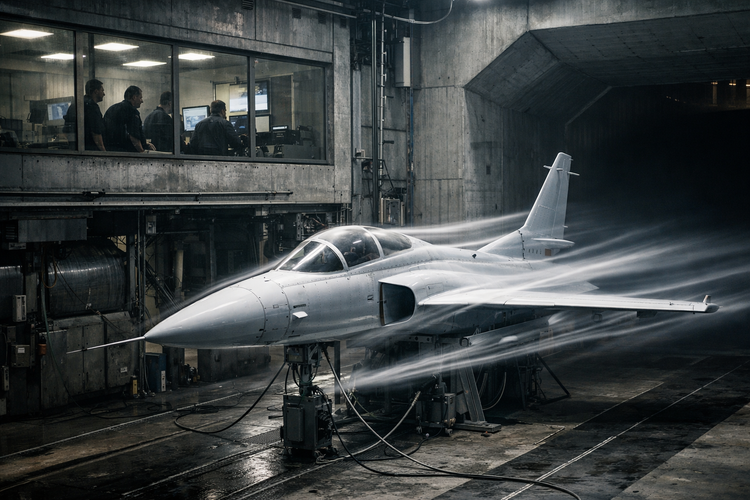
Disciplines such as aviation, railways, and high‑reliability manufacturing operate under subtraction as a design principle.
“Perfection is achieved, not when there is nothing more to add, but when there is nothing left to take away.” — Antoine de Saint‑Exupéry
Every component must justify its presence.
Every interface must defend its complexity.
Every procedure must earn its continuity.
Real engineering does not aim to impress. It aims to deliver what is needed, using the right tool for the job, with practices that minimise maintenance burden, control cost, and protect performance over time.
There is no need to design for three quarters of hypothetical futures. There is a need to design for durability. Systems must remain understandable by those who maintain them long after the original authors have moved on.
Elimination is not an act of retreat. It is an act of preservation. Subtraction protects coherence.
Without elimination, innovation collapses under its own weight.
Leadership and Subtraction
Elimination requires courage.
It demands the courage to dismantle infrastructure built by respected architects.
It demands the courage to question over‑engineering introduced with confidence and applause.
It requires the courage to retire initiatives before politics protects them.
It forces trade‑offs that addition conveniently postpones.
It also demands moral courage.
The courage to insist on sound engineering practices when emotional pressure pushes for shortcuts.
The courage to resist unrealistic deadlines framed as commitment tests.
The courage to push for small, disciplined iterations when grand plans promise visibility.
And sometimes, it demands a quieter form of courage.
The courage to accept that a situation cannot be changed.
The courage to state the risk clearly, document the warning, and still execute professionally when the decision goes another way.
Doing the job does not always mean winning the argument. Sometimes it means having voiced the truth and standing by the consequence.
Leaders often celebrate transformation.
Few celebrate disciplined removal.
Yet elimination, and the courage behind it, remains the oxygen of long‑term execution.
When Accumulation Turns Fatal
History provides concrete reminders that accumulation without elimination carries real consequences.
- Nokia struggled not because it lacked engineers, but because layers of platform decisions and internal complexity slowed its ability to adapt to the smartphone shift
- Kodak invented digital photography, yet legacy business structures and incentive systems prevented decisive subtraction of the old model.
- BlackBerry accumulated product variants and architectural constraints that limited strategic manoeuvrability at a critical moment.
- The 2022 operational collapse at Southwest Airlines revealed the cost of under‑investing in retiring legacy scheduling systems. Years of accumulation surfaced as systemic failure under stress.
- The breach at Equifax exposed how unpatched legacy components and opaque dependencies can transform technical debt into public crisis.
In each case, collapse did not begin with a single catastrophic decision. It emerged from years of tolerated accumulation, deferred elimination, and invisible risk.
Addition creates sponsors. Elimination creates enemies. Many organisations unconsciously choose the former.
The Quiet Discipline
Innovation without elimination leads to congestion.
Congestion leads to slower feedback loops.
Slower feedback loops reduce adaptability.
Eventually, organisations suffocate under the mass of their own past decisions.
The paradox remains simple:
- Addition feels like progress.
- Subtraction enables survival.
If innovation expands the system, elimination preserves its ability to breathe. The uncomfortable question remains:
"What have you deliberately removed in the last twelve months?"
If the honest answer is nothing, innovation may not be your problem. Discipline might be.



Member discussion