If You Cannot Trace the Flow, You Cannot Fix the System
Most managers try to fix outcomes. Good managers try to fix processes. Very few recognise that they are dealing with systems. Systems respond to one thing: flow.
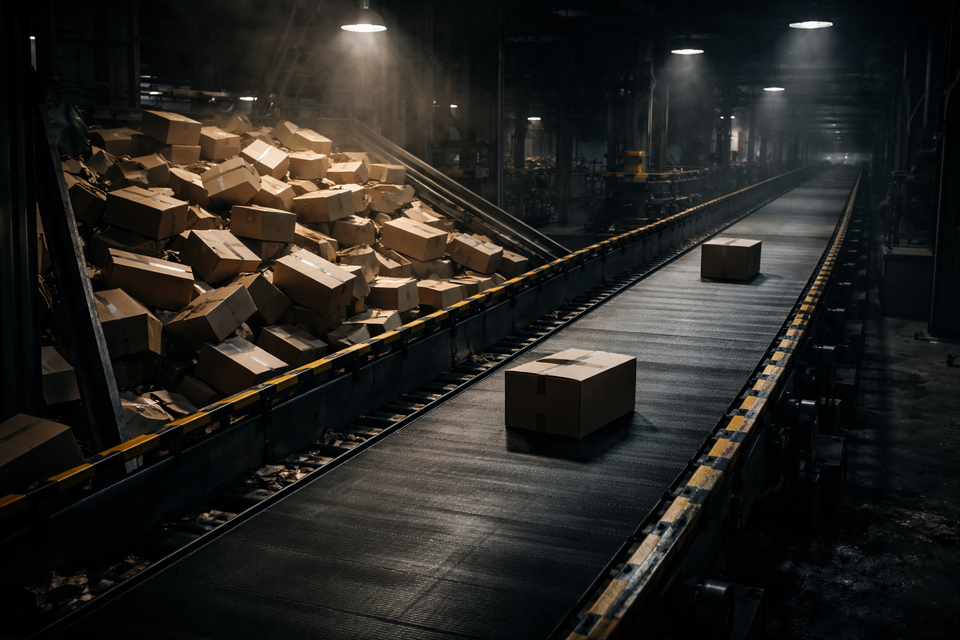
Every system follows the same structure: inflow, stock, and outflow. Ignore one, and management turns into guesswork.
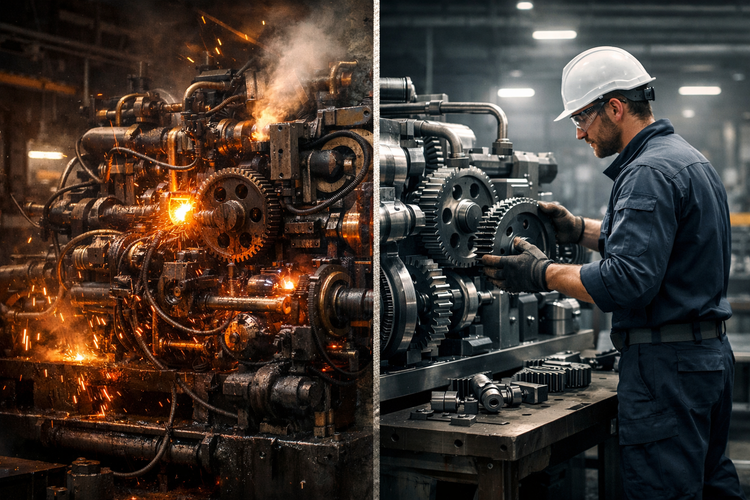
Think like a mechanic. When an engine fails, nobody starts with opinions. You check fuel, electricity, combustion. In other words, you verify flow before attempting optimisation.
Organisations do the opposite. They add tools, roles, and processes without confirming whether anything actually flows. Complexity grows while performance declines.
Understanding the System
Inflow defines what enters the system. Stock captures what accumulates: backlogs, work in progress, pending decisions. Outflow reflects what leaves as delivered value.
Stock is where systems confess. Excessive accumulation signals imbalance. Either too much enters, or too little leaves. In both cases, flow breaks.
Improving Efficacy : Fix the Inflow
Efficacy concerns what enters the system. It answers a simple question: are we solving the right problem?
Before optimising delivery, challenge the inflow. Are teams aligned with outcomes or hiding behind milestones? Are they moving the company forward, or staying busy? Are they amplifying value, or generating tasks until the system chokes?
A system can be highly efficient and still produce no value. That is the feature factory pattern: optimised execution, but no purpose.
Improving Efficiency : Fix the Outflow
Efficiency concerns how value exits the system. It is not speed or pressure. It is how cleanly and predictably value reaches production.
Effective systems deliver in small, controlled increments. They reduce rework, limit dependencies, and avoid long validation cycles. They solve problems at the right moment, neither too early nor too late.
Efficiency is not acceleration. It is disciplined, repeatable flow.
Friction and Balance
Friction is not the enemy. Some friction blocks flow and must be removed. Some protects quality and must be preserved.
The role of management is calibration. Remove everything and you get chaos. Add too much and you get paralysis. Systems require balance.
The Real Trade-off
Efficacy and efficiency cannot be optimised separately. Efficiency alone delivers irrelevant work faster. Efficacy alone produces ideas that never ship.
If the objective is something real, such as revenue per dollar invested, both must be balanced continuously. This is not sequencing. It is systems thinking.
A Real Example : Flow Over Activity
The Toyota Production System did not start by asking how to build cars faster. It asked how to eliminate waste from flow.
They controlled inflow by producing only what was needed. They limited stock through just-in-time, exposing problems instead of hiding them. They improved outflow by ensuring quality at each step, preventing defects from travelling downstream.
The result was not just efficiency. It was efficacy. Toyota built the right things, at the right time, with minimal waste.
Contrast this with many modern organisations. They increase inflow through endless feature requests, accumulate massive stock, and struggle to produce meaningful outflow. The system looks busy, yet value barely moves.
The difference is not talent. It is flow discipline.
There is a harder truth. Even systems that once worked drift over time. Under pressure and hype, skills erode, leaders stop stepping back, and local optimisation replaces systemic thinking.
What follows is predictable. Inflow expands, stock grows, and outflow becomes erratic. Activity increases, yet value does not.
Systems do not fail suddenly. They slowly replace thinking with activity.
Sanity Check : What Problem Are You Solving?
Leaders often introduce solutions without defining the problem. This creates noise, not progress.
The cloud solved elasticity and resilience, not modernisation theatre. AI should solve decision latency, automation, or signal extraction, not exist as an objective.
If the problem is unclear, the system will drift regardless of execution quality.
Measuring What Matters
Many organisations still measure activity instead of value. Counting features, story points, or lines of code optimises output, not outcomes.
Better signals exist. DORA metrics capture flow quality. Business KPIs capture behavioural change.
The objective is not to measure how much work is produced, but how effectively value moves.
A Simple Diagnostic
Before changing anything, answer three questions.
- What enters the system?
- What accumulates?
- What actually leaves?
Then identify where flow slows, where useless work accelerates, and where value is trapped. Without these answers, any intervention makes the system worse.
In Summary
Most organisational problems are not people problems. They are flow problems.
Flow does not respond to opinion or energy. It responds to observation, constraint, and balance. Like any engineered system.




Member discussion