If Other Industries Ran Like IT
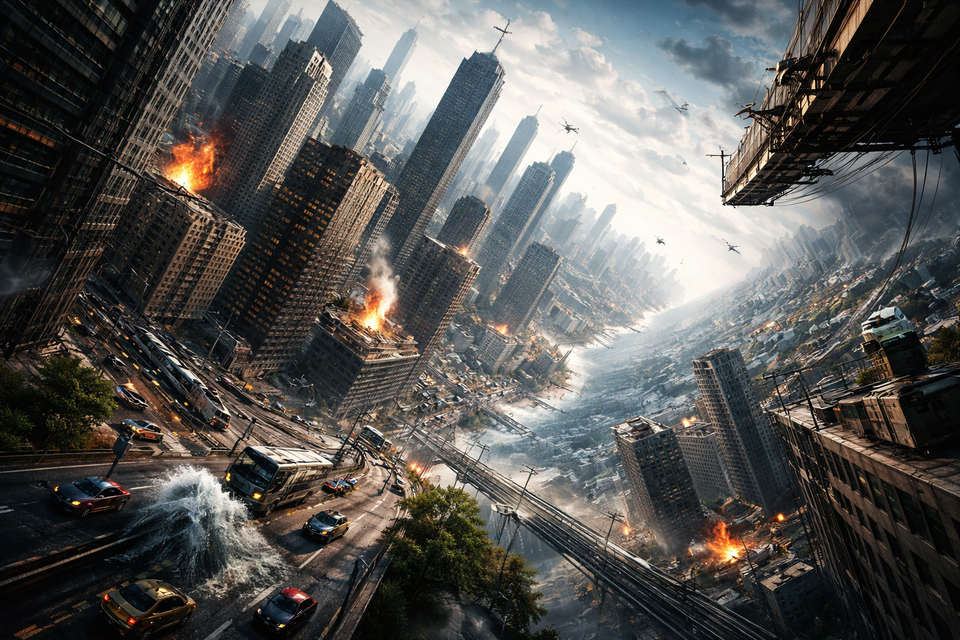
Friday fun. Satire first. Systems thinking underneath.
A simple thought experiment
Every industry develops its own relationship with reality.
Some learn quickly. Some learn painfully. Some do not learn at all.
IT likes to believe it sits among engineering disciplines. This short thought experiment suggests otherwise.
Let us imagine, briefly, that other industries adopted the operating model IT has normalised.
Aviation
Flights are deployed continuously.
Pilots discover new behaviours mid‑air.
If the aircraft loses altitude, a retrospective is scheduled.
The root cause is labelled unexpected turbulence.
A new checklist is proposed.
No flight is grounded.
Speed matters.
Automotive
Brakes ship as an experimental feature.
Crash tests are replaced by simulations maintained by a different team.
When accidents occur, customers are thanked for their feedback.
A roadmap promises better stopping power in Q4.
Meanwhile, the vehicle remains in production.
Civil engineering
Bridges open early to validate traffic assumptions.
Load limits are adjusted dynamically.
When cracks appear, they are reclassified as known structural behaviours.
An architectural review is scheduled for next year.
Firearms
Trigger resistance is configurable.
Safety mechanisms are planned for a later iteration.
Accidental discharge incidents are reframed as training issues.
The weapon remains certified.
Medicine
Treatments reach patients before trials conclude.
Side effects are tracked in dashboards.
Doctors are encouraged to move fast and learn.
Mortality is considered an unfortunate trade‑off for innovation.
IT
All of the above sounds absurd.
Yet none of it would raise an eyebrow in a software organisation.
Because IT is the only industry where reality is treated as feedback.
The quiet part
This is not about speed.
It is about understanding.
In Foundation, Isaac Asimov describes the late Galactic Empire through mundane failures rather than spectacular collapse. On Trantor, elevators still operate, most of the time.
Technicians can repair them.What they have lost is comprehension.
Maintenance becomes ritual. Knowledge turns into procedure.
Failure spreads everywhere, slowly, without panic.
The Empire does not fall because the lifts stop working.
It falls because nobody remembers why they ever did.
In Essence ...
We still ship.
We still patch.
We still keep the systems running.
But more and more often, we do not understand them.
That quiet erosion of understanding, long before any visible collapse, sits at the core of The Leadership Chronicles, a series examining how leadership choices shape the systems we inherit.
And that is never a late‑stage problem.
It is the beginning.

Member discussion