🧰 Friday Fun: The Corporate Survival Kit
By Friday, most people are not tired because of the work.
They are tired because of everything around it.
The work, on its own, rarely causes the problem.
It is usually clear, finite, and even satisfying.
What drains people is something else.
Something less visible, less defined… but always present.
So, over time, people adapt.
Not formally.
Not consciously.
But consistently.
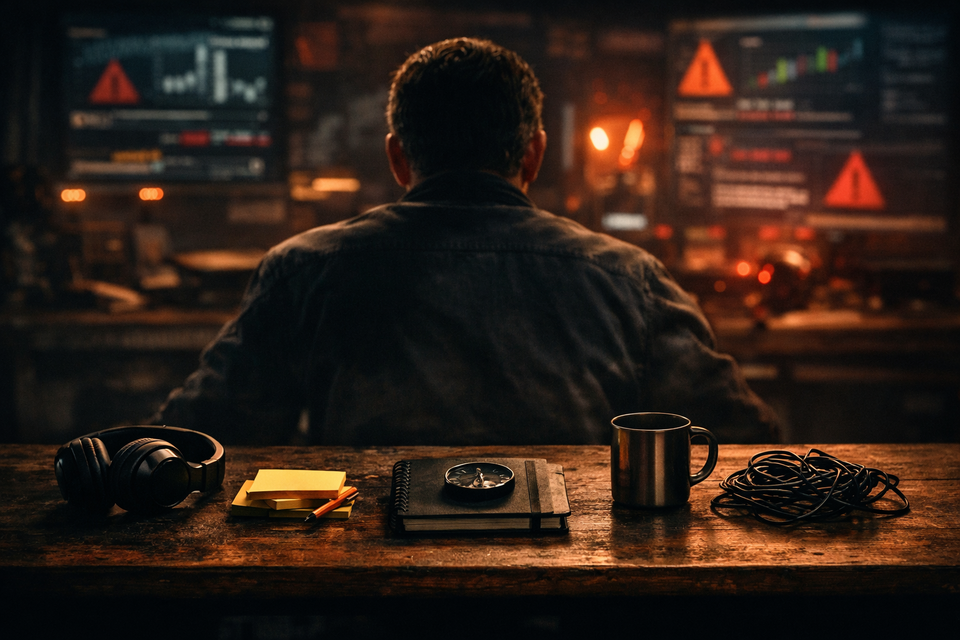
They build a survival kit.
It does not come in a box.
There is no onboarding session for it.
No documentation.
Yet, if you have spent enough time in any organisation,
you have seen it. You may even carry parts of it yourself.
There is the noise-cancelling headset.
Not just for sound, but for signal.
Because not every meeting deserves attention.
Not every discussion leads to a decision.
And not every voice carries clarity.
So people learn to filter.
Aggressively.
There is the translation layer.
Strategy rarely arrives in a usable form.
It comes fragmented, evolving, sometimes contradictory.
So someone, often quietly, translates it.
From vision to backlog.
From ambition to execution.
From “we should” to “this is what we will actually do.”
It is rarely acknowledged.
Yet without it, nothing moves.
There is the compass.
Because ownership is not always where it should be.
And responsibility does not always follow structure.
So people develop an instinct:
Who decides?
Who blocks?
Who actually knows?
The org chart says one thing.
Reality says another.
The compass points to reality.
There is the shadow notebook.
The unofficial one.
Where real priorities live.
Where shifting expectations are tracked.
Where contradictions are noted but rarely resolved.
Because what is written in tools
and what is expected in practice
are often two different worlds.
And, of course, there is the fallback plan.
Because production, unlike planning, does not negotiate.
At some point, reality asserts itself.
Deadlines arrive. Systems break. Customers react.
And when that happens,
all abstractions collapse.
Only what works remains.
None of this is new.
None of this is surprising.
And yet, it is everywhere.
The interesting part is not that people build survival kits.
Humans have always adapted to their environment.
The real question is:
Why do they have to?
When systems lack clarity,
people compensate with interpretation.
When ownership is blurred,
people compensate with alignment meetings.
When feedback is slow,
people compensate with anticipation.
When priorities shift,
people compensate with duplication.
Individually, each adaptation makes sense.
Collectively, they create friction.
Latency. Waste.
Not visible at first.
But always present.
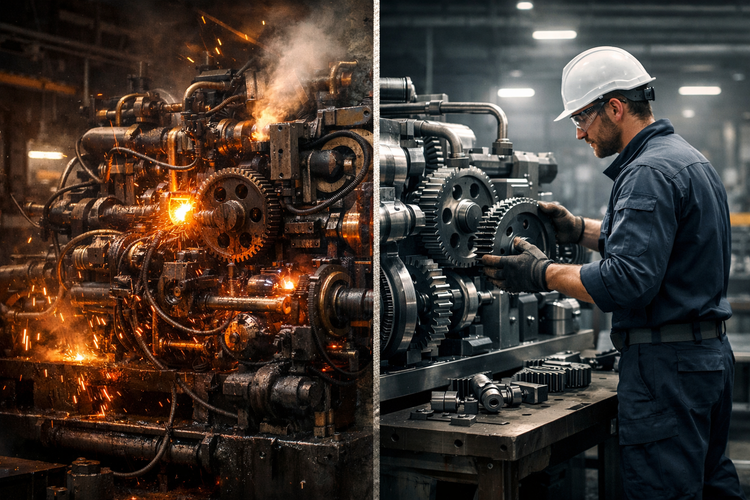
Good organisations work differently.
Not because they hire better people.
But because they remove the need for adaptation.
They design for clarity.
So translation becomes unnecessary.
They design for ownership.
So compasses are not required.
They design for flow.
So notebooks do not diverge from reality.
They design for fast feedback.
So fallback plans become rare.
In those environments, something interesting happens.
Energy returns.
Not because people suddenly become more motivated.
But because they stop fighting the system around them.
They can focus on the work itself.
And that is usually enough.
So if you recognise parts of this survival kit,
do not blame the people carrying it.
They are doing what humans always do.
They adapt.
The real work is elsewhere.
Not in asking people to cope better.
But in designing systems that do not require coping at all.
And maybe that is the simplest test of all.
If your organisation needs a survival kit,
it does not need more effort.
It needs better design.



Member discussion