Friday Fun: A Normal Day in a Slightly Unstable Universe

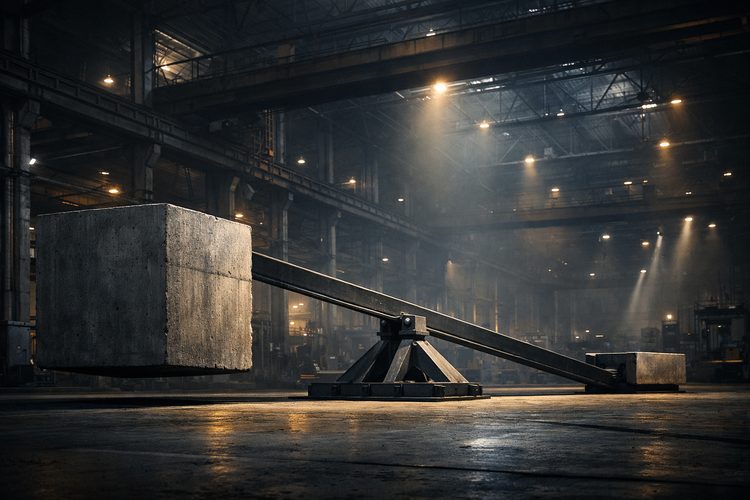
Most engineering leaders do not dream of yachts. They dream of stability.
Not stagnation.
Not bureaucracy.
Just gravity.
But first, let us walk through a normal Tuesday.
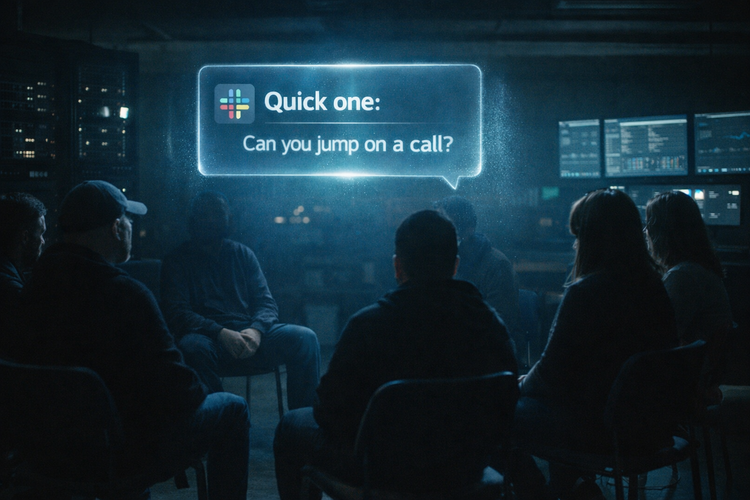
08:12 — Slack is already blinking.
A large customer has "concerns."
Concerns means churn risk.
Churn risk means executive attention.
Executive attention means immediate reprioritisation.
The roadmap quietly shifts.
Again.
09:30 — Leadership sync.
Leaders review three initiatives that were top priority last month.
Two are “paused.”
One is “strategic.”
Nobody can clearly explain why.
Someone says the word “scale” four times.
It remains undefined.
10:45 — Product update.
A feature promised in a sales call needs acceleration.
Engineering “just needs to integrate.”
Integration means discovering five invisible dependencies and one undocumented legacy service.
11:30 — Infrastructure discussion.
The platform team mentions technical debt.
The room nods.
The room moves on.
Debt is acknowledged, rarely amortised.
13:00 — Hiring conversation.
We are short on capacity.
Naturally, the solution is to hire more capacity.
No one asks whether the system amplifies or absorbs talent.
14:15 — Incident.
A production issue appears.
A senior engineer fixes it manually.
Heroic effort.
Temporary relief.
Applause in Slack.
Root cause analysis scheduled for next week.
16:40 — Board deck review.
Growth curve looks optimistic.
Burn rate is “manageable.”
Retention slide is dense with footnotes.
We end the day tired.
Not from engineering.
From volatility.
Now, somewhere else, there is another Tuesday A friend works there. They have been around for 50 years.
No one calls it a scale-up.
They simply call it a company.
Their morning starts differently.
08:30 — Roadmap review.
It has changed once this quarter.
Because something material changed.
Customers rarely surprise them.
Most contracts renew.
Churn exists, but does not threaten survival.
09:45 — Engineering sync.
Teams discuss improvements to deployment automation.
Not because of an outage.
Because compounding small gains matters.
11:00 — Product planning.
Sales did not promise features blindly.
There is a process.
It is slower.
It is quieter.
It works.
14:00 — Technical debt review.
Not a complaint session.
A budgeted line item.
Debt gets paid down deliberately.
Like infrastructure maintenance in a city that plans to exist next year.
17:30 — End of day.
People leave without adrenaline spikes.
No Slack heroics.
No last-minute pivots.
No existential dread disguised as ambition.
Just steady execution.
Engineering leaders in volatile companies often tell themselves the chaos is temporary.
“We are just early.”
“We are still finding product-market fit.”
“We will stabilise after the next round.”
Sometimes that is true.
But often the scale-up phase has simply expired, and nobody is willing to admit it.
Instability is no longer a phase. And denial sets in quietly.
Leaders who built their identity around being a “scale-up executive” struggle to run a steady company.
Investors anchored in past valuations hesitate to reset expectations.
Teams continue sprinting because slowing down feels like failure.
Sunk cost masquerades as vision.
Adolescence gets rebranded as culture.
It is "a" model.
A model where funding replaces resilience.
Where narrative replaces margin.
Where hiring replaces system design.
Where urgency replaces prioritisation.
It feels dynamic.
It looks exciting.
It burns bright.
Until it does not.
The uncomfortable truth is this:
Maturity is less glamorous.
It does not trend on social media.
It does not produce heroic war stories.
It does not celebrate fire-fighting.
It compounds.
Mature organisations:
- Lose a customer and keep breathing.
- Ship incrementally without drama.
- Fund improvements from cash flow, not hope.
- Retain talent because systems protect energy.
- Sail rough seas without announcing a transformation every quarter.
They understand that scale is not about growing fast.
It is about absorbing growth without losing structural integrity.
The Phoenix Project made one lesson painfully clear: chaos feels productive until you measure flow.
Fire-fighting feels like leadership until you measure stability.
Heroics feel noble until you measure sustainability.
Most engineering leaders do not want comfort.
They want predictability.
They want compounding effort.
They want to build something that still works when nobody is watching.
They want to sail waters where one lost contract does not threaten payroll.
Where purpose does not depend on the next funding announcement.
Where engineering thrives not because of constant crisis, but because the system allows focus.
And perhaps that is the quiet evolution every company must face:
From adolescent energy to adult discipline.
From volatility to ballast.
From theatre to craft.
One Tuesday at a time.



Member discussion