Code Without Concept or How the Absence of Thought Erodes Engineering
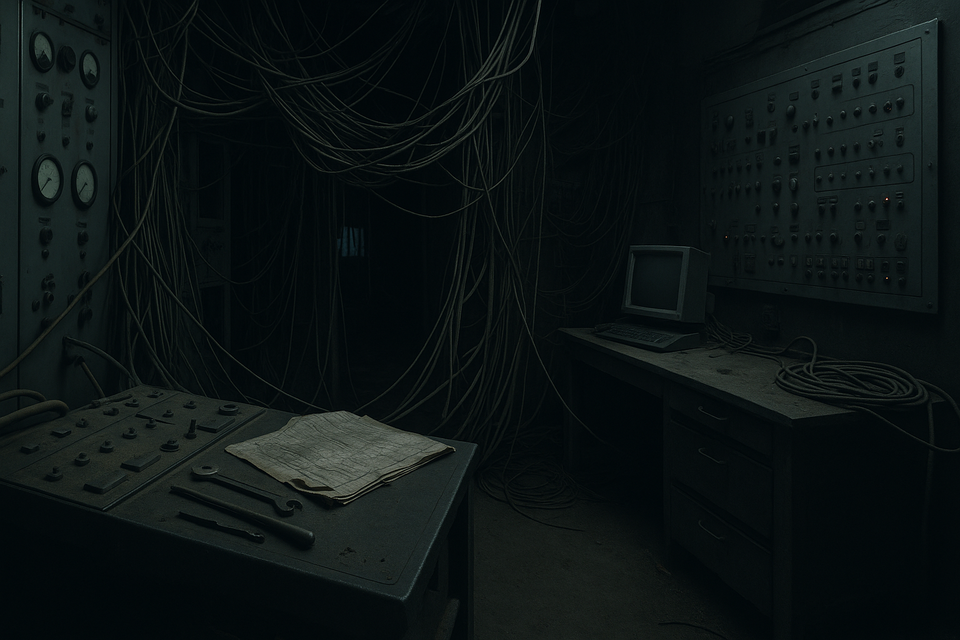
The Disappearance of Engineering
What happens when code is written without a concept? When frameworks replace thought? When architecture becomes nothing more than a deployment target? It means the decay of engineering practices, and the assembling of syntax on life support.
At its core, engineering concerns the act of solving problems, not merely patching symptoms. Engineers build mental models, engage with form and function, and create enduring concepts that transcend tools and trends. Yet in the present industry, conceptual clarity has given way to tech stack enthusiasm, and problem-solving has surrendered to copy-paste delivery.
We do not require Kafka. We require an understanding of event-driven versus message-driven paradigms. We do not require Airflow. We must recognise when orchestration constitutes a first-class concern.
Concepts endure. Tools decay. Without conceptual grounding, teams drift, constructing fragile systems they cannot fully comprehend.
From Systems Thinking to Framework Cargo Cults
The absence of systems thinking manifests at every layer of delivery. One can observe:
- Decisions driven by AI hype and market momentum, rather than architectural reasoning or domain insight. The industry has experienced this before, during the AI winter, the dot-com bubble, and the era of cloud euphoria. Each cycle produced waste, disillusionment, and extensive layoffs once hype overtook deliberation.
- Obsession with tools absent of intent
- Engineers unable to explain why something was built
- Dependency graphs beyond rational explanation
- Debugging efforts that reconstruct meaning from scattered behaviours
This is what occurs when code lacks conceptual structure: systems arise accidentally. And worse, they solidify prematurely. Legacy begins on day one.
Engineers Are Not Code Typists
True engineers approach the problem first, guided by domain knowledge, attention to form, and rigour in thought. They operate with outcomes in mind, working from the top down. Their path begins with the problem statement, advances to concept formation, and concludes with implementation. Never the inverse. They seek the correct problem statement , not the first one. They draw careful distinctions between:
- Coordination and orchestration
- Push and pull models
- Strong and eventual consistency
- Event and command
- DSL and API
- Service and platform
Absent these distinctions, code becomes incoherent. Architecture becomes incidental. Decisions resemble rituals, detached from context.
When Concepts Disappear, Rewrites Accelerate
One team rewrote a mission-critical service three times in under two years. Why? No one could explain the orchestration logic. Every engineer guessed. Nobody remembered. The system ran, but no one understood how or why. This did not result from incompetence. It resulted from a conceptual void.
Systems lacking conceptual grounding often demand rewrites. Not by preference, but by necessity. What once appeared rapid later proves costly. Inconsistency often escapes detection. It might satisfy SonarQube, tick compliance boxes, or pass code reviews. But this represents the watermelon effect: green on the surface, red at the core.
This connects directly with earlier observations in former articles, the erosion of empathy, the loss of shared accountability, the decline of systemic thought. When engineers forfeit conceptual intent, they also lose connection to their colleagues. Code, architecture, and interfaces become isolated artefacts, not components of a coherent whole.
Maintainers bear the cost first. Lacking structured onboarding, each module becomes a cryptic puzzle. Patterns vanish. Syntax loses expressiveness. Concerns remain entangled. Declarative choices, self-explanatory structures, and modular design matter. But only when rooted in coherent intent. Intent gives systems their shape. It fosters empathy.
Conceptual clarity does not serve only a technical function. It affirms an ethical one. Engineering done with care leaves more than code: it leaves discernible thought. It leaves markers of decision, scope, and rationale. Engineers who care leave traces of intent. They design so others may follow. Concept-driven systems feel coherent because they honour the next person.
Without intent, the system becomes a haunted house. One does not navigate it, but avoids it. Each change brings uncertainty. Each extension invites risk. In time, fear replaces care. This is how teams lose trust in their codebase.
Conceptual integrity shapes systems, not only for machines, but for the humans who must maintain them. Principles like separation of concerns or declarative syntax assist only when they serve an overarching design. Intent must guide structure.
Ultimately, thoughtful engineering builds for the next person . Not for a deadline. Not for applause. It prioritises clarity, care, and continuity.
What We Can Do: Restore Conceptual Visibility
To break the cycle of decay and rebuild integrity, teams must create visibility over both decisions and structure. That requires tools and consistent habits:
- Maintain and circulate Architectural Decision Records (ADRs)
- Make architectural intent visible and discoverable
- Map domains and delineate ownership clearly
- Track conceptual alignment alongside performance metrics
- Involve stakeholders early in design conversations, especially in platform teams
- Partner with early adopters to challenge, validate, and refine abstractions
- Anchor technical direction to SLOs and transparent trade-offs
Conceptual integrity must become operational. Systems evolve coherently only when the organisation treats design as a first-class discipline.
Build for the Mind
Fred Brooks spoke of it:
"Conceptual integrity is the most important consideration in system design."
Christopher Alexander observed:
"Every part must fit into the whole, and the whole must be in the service of the human."
Concepts provide leverage. Absent that, code becomes scaffolding, ephemeral, fragile, and unloved. One may ship code quickly. Or one may build systems that endure. The latter demands clarity.
Systems without concept do not age. They rot.





Member discussion